Seasonal Event Planning
How to Host a Pumpkin Carving Party Without the Mess Taking Over
A pumpkin-carving party gets easier when the activity has a path. Use the Clean, Carve, Glow Plan to organize safe roles, table space, food, timing, and cleanup.
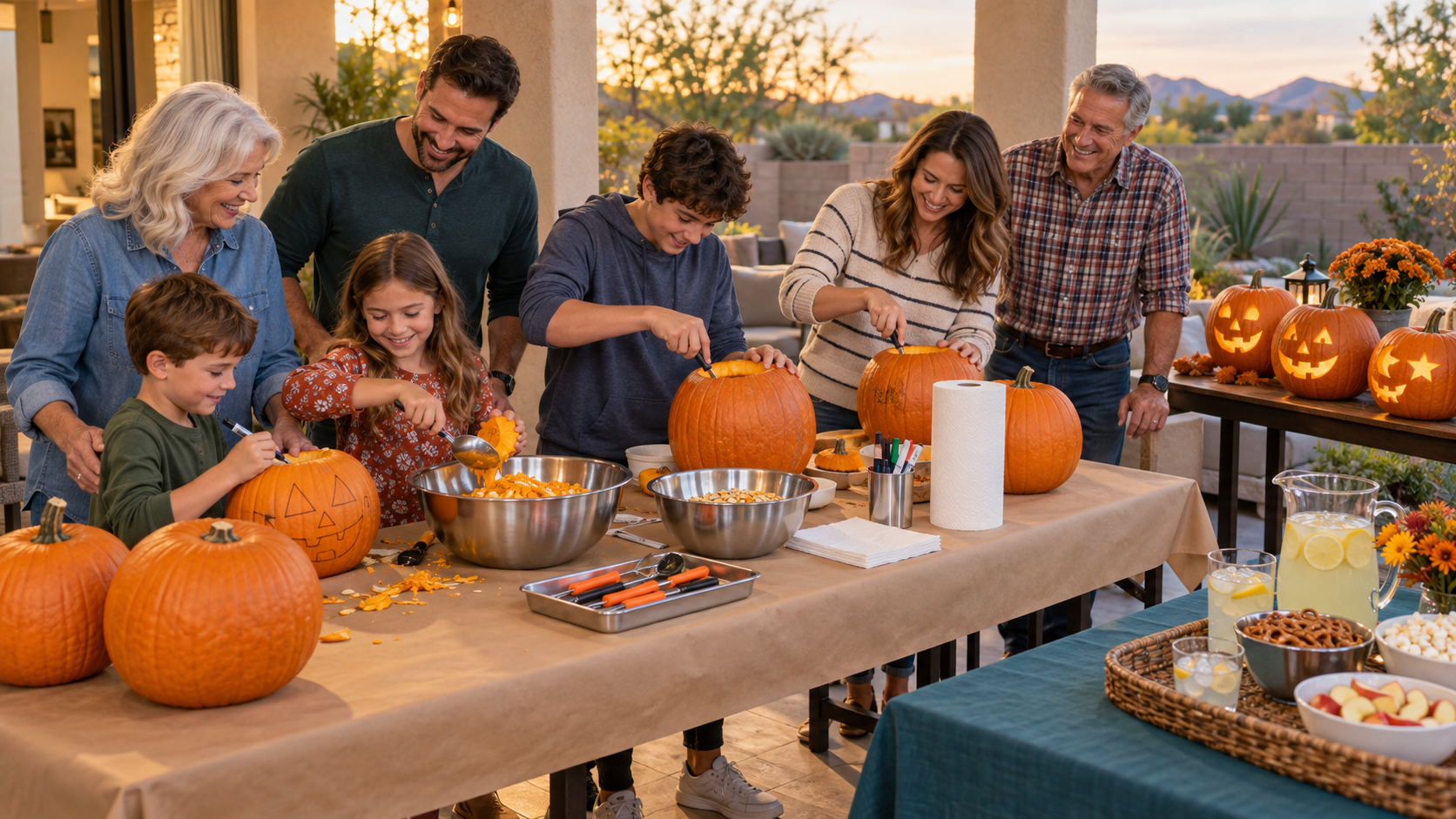
Pumpkin carving sounds like the activity that plans itself. Then the first lid comes off, every spoon disappears into the same bowl, somebody reaches across the snacks with orange hands, and the host realizes the fun is happening under a layer of pumpkin pulp.
The practical answer is to plan one clear path: Clean, Carve, Glow. Guests choose or bring a pumpkin, design it in a clean spot, move to a protected carving seat, and finish at a separate display area. Give adults the cutting jobs, offer younger children decorating and scooping roles, keep food on the clean side, and prepare the table so cleanup can roll up instead of spread out.
Quick answer: Protect one roomy work surface and the floor below it. Put whole pumpkins and markers at the clean end, bowls and approved tools at each carving place, and battery-operated lights at a separate glow station. Adults control all cutting. Keep snacks and drinks on another table. A 90- to 120-minute party is usually enough for arrival, design, carving, a reveal, and a quick group cleanup, but adjust the plan to your guests.
Choose Roles Before Anyone Picks Up a Tool
A mixed-age party works better when every guest has a real job, but not the same job.
Adults should own cutting and supervise the carving surface. Older children and teens may be able to use age-appropriate pumpkin tools under direct adult supervision, but the responsible adult should decide that from the actual child, tool instructions, and setting. Younger children can draw faces, scoop pulp with a large spoon, sort seeds, place stickers, or decorate a separate pumpkin without cutting.
The American Academy of Pediatrics advises that small children decorate rather than carve, while adults handle cutting. Its Halloween pumpkin-decorating guidance also recommends a flashlight, glow stick, or battery-operated light instead of an open flame.
Plan an equally visible decorating seat before guests arrive. If the non-carving option looks like an afterthought, younger children will still want the tool everyone else has.
The goal is not to make children watch the fun. It is to give them a safe part of the same project.
Build the EventRent AZ Clean, Carve, Glow Path
Think of the party as a short path rather than one overloaded table.
| Stage | What happens there | What belongs there | Host check |
|---|---|---|---|
| Clean | Guests choose a pumpkin, sketch a design, and settle in | Whole pumpkins, washable markers, paper, simple templates, name labels | No blades, pulp, food, or finished pumpkins crowd this area |
| Carve | Adults open pumpkins, guests scoop, and approved carvers cut designs | Protected table, approved tools, large spoons, one pulp bowl per small cluster, paper towels | Tools stay on trays and the floor path stays clear |
| Glow | Finished pumpkins receive battery lights and get photographed | Stable display surface, battery lights, dry towels, optional phone tripod owned by the host | Finished pumpkins are away from cutting, food, and guest traffic |
The clean and carve stages can share one long table if the zones remain obvious. The glow area should be separate so finished pumpkins do not travel back through tools and scraps.
If this party is part of a larger Halloween gathering, use the EventRent AZ mixed-age Halloween party guide to set the scare level, timing, and shared moments without repeating this carving plan.
Give Every Pumpkin Real Elbow Room
A pumpkin is wider than a dinner plate and harder to control. Count work places, not chair backs.
Run the Elbow Room Test before you finalize the table:
- Put a medium pumpkin at one planned seat.
- Sit down with both forearms resting naturally beside it.
- Add a bowl, spoon, folded towel, and the tool tray an adult will control.
- Pretend to turn the pumpkin without touching the next place.
- Pull the chair back and confirm another guest can pass safely.
If the test fails, remove a place or add another protected surface. Do not solve crowding by piling shared tools in the middle.
Also count support surfaces. The pumpkin table is not the drink table, snack table, finished-pumpkin shelf, or supply dump. The EventRent AZ table-and-chair planning guide can help separate guest seats from the extra tables that make the activity work.
Solve the Awkward Pumpkin Questions in the Invitation
Decide whether the host provides pumpkins or guests bring their own. Confusion does not work.
If guests bring pumpkins, say what size works and whether the host provides tools and decorating supplies. If the host provides them, ask for a firm RSVP before buying and choose pumpkins appropriate to the planned activity. Do not promise every guest a particular shape or carving experience unless that is actually confirmed.
A copy-ready invitation note:
Join us for a pumpkin-carving party on Saturday from 4:30 to 6:15 p.m. Please bring one medium pumpkin per carver. We will provide protected work space, markers, scoops, supervised carving tools, battery lights, and simple snacks. Adults will handle cutting for younger children, and a no-cut decorating option will be ready. Wear clothes that can handle pumpkin pulp, and tell us about any food, access, or sensory needs when you reply.
Change every detail to match the real party. If guests should not bring a pumpkin, say that plainly. If the event is indoors, outdoors, drop-off, or family-attended, remove the guesswork.
The EventRent AZ party invitation timing guide can help set the send date and reminder without turning one text thread into the whole plan.
Keep Food and Drinks on the Clean Side
Pumpkin pulp, tool handles, shared bowls, phones, and snacks should not compete for the same surface.
Serve food before carving begins, after hands are washed, or on a separate table that guests can reach without crossing behind active carvers. Choose simple food that does not need the host to cook while everyone else is at the table.
- Water and drinks live where clean cups stay clean.
- Snacks are easy to pick up without touching a shared serving bowl repeatedly.
- Ingredient and allergen information is available for the actual menu.
- Napkins for eating are not the same pile used for pumpkin cleanup.
- Young children eat seated and away from tools.
Set the spending cap before pumpkins, food, tools, battery lights, table protection, and take-home supplies quietly become five separate shopping trips. The EventRent AZ party budget calculator can keep the activity, food, seating, and contingency in one view.
Use a Simple 100-Minute Flow
This sample schedule gives the party shape without turning it into a class.
| Guest time | What guests experience | What the host protects |
|---|---|---|
| 0:00 to 0:15 | Arrive, place pumpkins, get a drink, and choose a design | Name every pumpkin and point out clean, carve, and glow areas |
| 0:15 to 0:30 | Draw designs and open pumpkins | Adults handle cutting; younger children begin decorating or scooping |
| 0:30 to 1:10 | Scoop, carve, talk, and help one another | Tools stay on trays; bowls are emptied before they overflow |
| 1:10 to 1:25 | Add battery lights and move pumpkins to the display | Dry each pumpkin base and keep the display route clear |
| 1:25 to 1:35 | Take a group photo or do a relaxed reveal | Skip forced judging unless the guest group genuinely wants it |
| 1:35 to 1:40 | Carry pumpkins to the pickup area and help with a quick reset | Match pumpkins to names and begin the roll-up cleanup |
Treat this as a planning example, not a performance target. A smaller adult group may move faster. Young children, complex designs, accessibility needs, or an easy dinner may need more time.
Avoid announcing a winner unless everyone knows it is a contest. Funniest face, brightest glow, or cleverest no-cut design can be warm optional categories, but a simple display and photo often protect the feeling better.
Start Cleanup Before the First Pumpkin Opens
The easiest cleanup is built into the setup.
Cover the full work surface, including the edges most likely to catch scraps. Protect the floor if the surface underneath requires it. Put one large bowl within easy reach of each small group, plus a lined waste container near the exit from the carving zone. Keep a separate tray for every cutting tool so none disappears under wet paper.
Then use this six-step reset:
- Count and collect every tool before rolling or moving paper.
- Move finished pumpkins to the named pickup area.
- Decide whether seeds or pulp are being kept, composted where allowed, or discarded. Do not give the host a surprise roasting project.
- Lift bowls and trays, then fold the paper inward from the cleanest edges.
- Wipe and dry the table using the surface owner's approved method.
- Check the floor, chair legs, sink, door handles, and the route guests used to carry pumpkins out.
Give two adults the final reset before the party starts. One owns tools. One owns table and floor. A named ten-minute job is more useful than hoping everyone notices the mess.
The U.S. Consumer Product Safety Commission recommends leaving pumpkin carving to adults and using battery-operated lights or glow sticks instead of open flames. Review its pumpkin-carving and Halloween safety guidance during the human safety check.
Choose an Arizona Setting That Works at Party Time
Do not choose the patio simply because the invitation says fall. Choose the space that is comfortable, bright, washable, and easy to supervise at the actual hour of the event.
For an East Valley home, that may mean a covered patio near a sink, a garage with safe ventilation and a clear floor, a clubhouse craft room, or an indoor dining area protected for the activity. If conditions change, the backup should preserve the same path, not force every supply onto one small kitchen table.
Check these details in the room you will really use:
- Faces, hands, pumpkin lines, and the floor are easy to see.
- Adults can supervise tools without standing in the only walkway.
- Younger children have a nearby no-cut place that still feels included.
- Guests can wash hands without crossing food service.
- Finished pumpkins can leave without dripping through the home.
- The setting follows property, HOA, clubhouse, fire, cleanup, and access rules.
Pumpkin-Carving Party FAQ
Should guests bring their own pumpkins?
Either plan works. Asking guests to bring one pumpkin can reduce the host's shopping and let people choose their own size. Providing pumpkins creates a more consistent setup but requires a firm count, transport, storage, and a plan for extras. State the decision clearly in the invitation.
What can young children do instead of carving?
They can draw a face with washable markers, use stickers or other age-appropriate decorations, scoop pulp with a large spoon under adult supervision, sort seeds if appropriate for the child, or help add a battery-operated light after an adult finishes the pumpkin. Confirm materials and choking risks for the actual ages present.
How long should a pumpkin-carving party last?
Plan roughly 90 to 120 minutes for a small mixed-age group, then adjust for arrival style, guest count, ages, design complexity, food, accessibility, and cleanup. A clear ending helps guests finish without the host rushing every pumpkin.
How do you keep a pumpkin-carving party from getting too messy?
Use a protected surface, a pulp bowl within easy reach of every small group, a dedicated tool tray, a separate food table, a finished-pumpkin area, and paper that folds inward when carving ends. Count tools before rolling the table covering.
Let the Pumpkins Be the Party
A pumpkin-carving party does not need a second activity, a complicated menu, or a house full of decorations. The shared work is already the reason people came.
Give every age a real role. Build the Clean, Carve, Glow Path. Test the table with one pumpkin before setting every chair. Keep food clean, tools controlled, and the final display separate. When cleanup is part of the plan, the host gets to carve, laugh, and carry one glowing pumpkin outside with everyone else.