Birthday Planning
Do Parents Stay at Kids’ Birthday Parties? Make the Plan Clear Before Guests Arrive
Decide whether parents stay, drop off, or choose with the host. Then make the invitation, adult headcount, arrival, and pickup plan clear before party day.
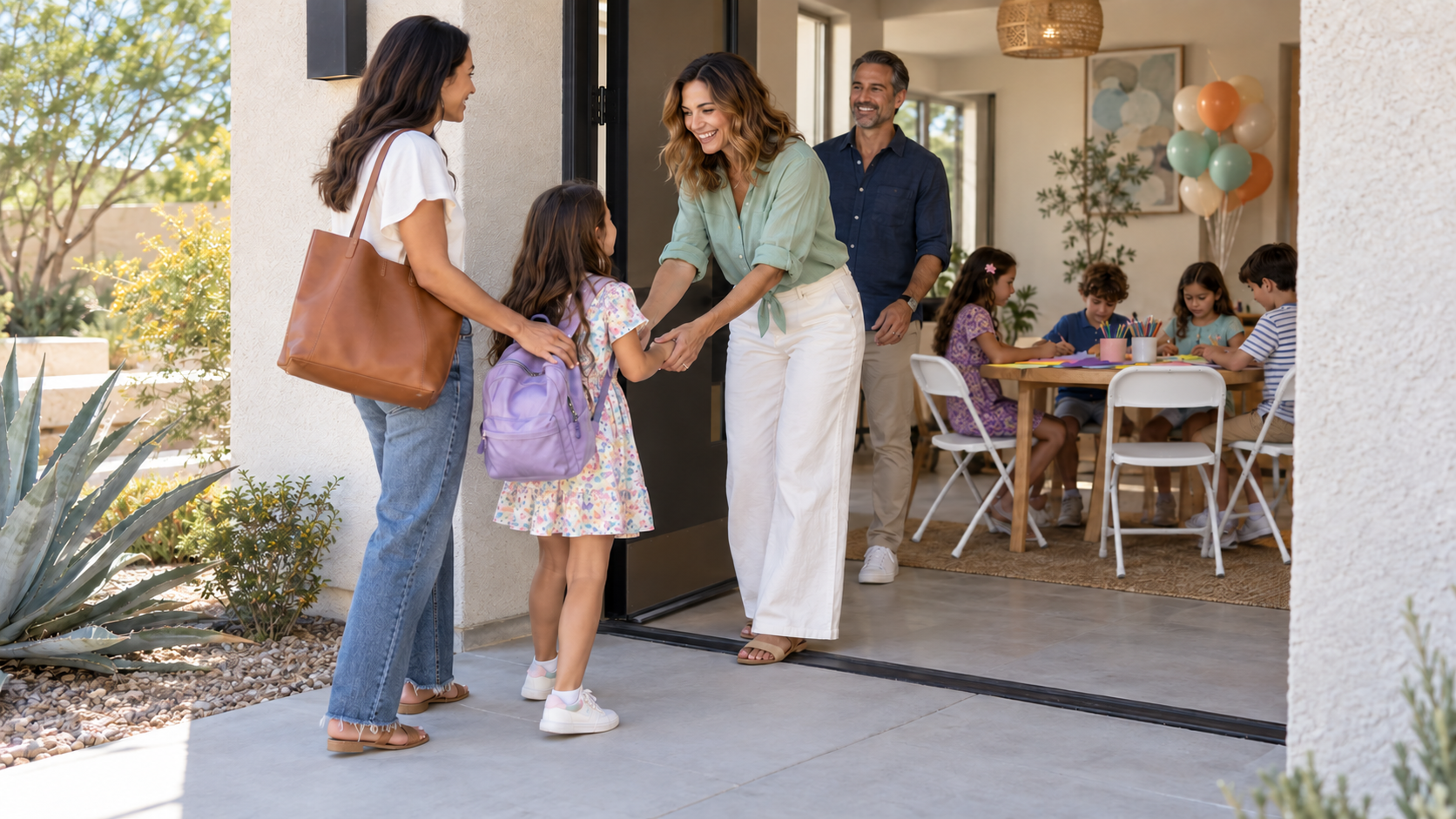
The invitation is out, the cake is ordered, and then the texts begin. "Am I staying?" "Is this drop-off?" "Can her little brother come too?" One fuzzy sentence can quietly change the guest count, the food, the seating, and the mood at the door.
There is no single drop-off age that works for every child or party. The host should choose one of three plans before sending the invitation: parents stay, children are dropped off, or families decide together based on the child's comfort. Make the choice from the child, activity, location, and adult help you actually have. Then state it plainly.
Quick answer: For toddlers and children who need close support, plan for a grown-up to stay. For a school-age child who is comfortable separating, a drop-off party can work when the host has enough trusted adult help and a clear contact and pickup plan. When the group is mixed, invite parents to decide together with the host. Do not make families guess at the door.
In this guide
- Why there is no universal drop-off age
- Choose Stay, Drop, or Decide Together
- Use the Five-Part Doorstep Check
- Write the parent plan into the invitation
- Plan for the adults who may stay
- Make arrival and pickup boring in the best way
- If you are the invited parent, ask before assuming
- Birthday party parent FAQ
There is no universal drop-off age
Age matters, but it is only one clue. Two children in the same class can feel completely different about entering an unfamiliar home, joining a loud group, managing food restrictions, or asking an adult for help.
The party matters too. A small craft party at a familiar friend's house asks something different from a crowded public venue, a pool gathering, or an activity with special instructions. A parent may be comfortable leaving for one and want to stay for another.
The better question is not, "What do parents usually do at this age?" It is, "What does this child need, and what can this host safely and comfortably manage?"
The host gets to set the format. The invited family gets to decide whether that format fits their child. A clear invitation lets both sides make that choice without embarrassment.
If the event length is still unsettled, use the birthday party duration guide and Centerpiece Clock before promising a pickup time.
Choose Stay, Drop, or Decide Together before you count guests
Pick one parent plan while the guest list is still a draft. That decision changes how many people the space must hold, how much food and water to set out, where adults will sit, and how the front door or venue entrance should work.
| Parent plan | Best fit | What the invitation must say | What the host must plan |
|---|---|---|---|
| Stay | Younger children, water activities, children who need close support, or a host who wants a family-style party | A parent or caregiver should remain for the party; clarify whether siblings are included | Adult headcount, seats, drinks, food expectations, parking, sightlines, and conversation space |
| Drop | Children comfortable separating, a familiar group, and a host with enough confirmed adult help | This is a drop-off party; give exact start and pickup times plus a contact method | Check-in, emergency contacts, allergies or accommodations, secure supervision, belongings, and an organized pickup |
| Decide together | Mixed readiness, a new friend group, or families the host does not know well | Parents may stay, leave, or help the child settle briefly; ask them to tell the host with the RSVP | A realistic range of adult guests, a short transition window, and a private way to share the child's needs |
Do not label the flexible option and then plan as if every adult will leave. Ask the parent plan with the RSVP so the working headcount includes the people most likely to stay.
When parents are invited to remain, the party becomes a family gathering. The guide to making a kids' birthday enjoyable for adults too can help with comfortable seating, easy introductions, and one shared moment without planning a separate adult party.
Use the EventRent AZ Five-Part Doorstep Check
Before finalizing the invitation, walk through these five questions. A weak answer does not automatically cancel the idea. It tells you what must change.
1. Child: Can each invited child enter and ask for help?
Think about more than whether the birthday child is ready. Will the invited children know the host? Can they find a restroom, say they are uncomfortable, or ask about food? Is there a child who may need a parent nearby or a quieter transition?
Do not ask families to disclose private details publicly. Give them one direct contact and a simple chance to share what would help their child participate.
2. Place: What does the location or activity require?
A home, park, pool, clubhouse, trampoline venue, craft studio, and movie room create different supervision and access needs. Confirm the actual venue rules and do not assume venue staff replace the host's responsibilities.
Look for entrances, parking, restrooms, water, gates, fast-moving activity areas, and any place a child could become separated from the group. If the plan feels complicated during an empty walk-through, it will not become simpler at arrival.
3. People: Which adults have agreed to help?
"There will be adults around" is not a plan. Decide who welcomes families, who stays with the main activity, who handles food or cake, and who can step away if a child needs help.
Those people should know their jobs before the doorbell rings. Extra parents who happen to stay can be welcome guests, but they should not be the host's unspoken supervision plan.
4. Particulars: What information must travel with the child?
Collect the parent or caregiver's name, a reachable phone number, allergy or food information, relevant accommodations, and who may pick up the child. Keep the request proportionate and protect private information.
The party plan should also tell families what to bring, what to wear, and whether a special permission or venue waiver is genuinely required.
5. Passage: How will the first and last ten minutes work?
Choose one clear arrival point and one clear pickup point. Decide where gifts and belongings go. Put the finish time in writing and send any day-of update through the same channel families already used.
A calm party can still begin and end badly if children, parents, and bags are moving through the same doorway without a plan.
Write the parent plan into the invitation
The theme can be playful. The parent instruction should be plain. Put it near the date and time, not in a message sent after families have already replied.
The EventRent AZ invitation timing guide can help set the send date, RSVP deadline, and one useful reminder. Add one of these blocks to make the attendance plan clear.
When a grown-up should stay
Please plan for one parent or caregiver to stay and enjoy the party with us. Let us know with your RSVP who will attend. The invitation is for the named child and one grown-up; please ask before bringing siblings.
When the party is drop-off
This is a drop-off party. Please bring your child to [arrival point] at [start time] and pick up at [pickup point] at [end time]. We will confirm your contact number and any food or support needs at RSVP.
When families may decide together
Parents are welcome to stay, drop off, or help their child settle for the first 15 minutes. Please tell us your plan with the RSVP so we can prepare the space.
When siblings are not automatically included
We planned the activity and space for the children named on the invitation. Please check with us before bringing siblings so we can confirm what the setup can hold.
Warm wording is helpful. Clear wording is kinder. A family can make a comfortable yes or no when the invitation states the actual plan.
Plan for the adults who may stay
If parents may remain, count them as guests even if they are not eating cake or joining every activity. They still need a place to stand or sit, a clear route, water, restroom access, and enough room to supervise without blocking the children.
Avoid scattering chairs around the perimeter like a waiting room. Group a few seats where adults can talk while still seeing the main activity. Keep adult conversation away from the busiest child traffic, but do not exile parents to a separate corner.
Use the party table-and-chair planning guide to separate guest seating from cake, food, gifts, drinks, and activity surfaces. The goal is not to fill the yard with furniture. It is to give each job a stable place.
Adult attendance can also change food, drinks, venue charges, and supplies. Run a likely low and high headcount through the free EventRent AZ party budget calculator if that range affects what the host can comfortably provide.
Make arrival and pickup boring in the best way
The first ten minutes should answer three questions without a speech: Where does my child go? Who is in charge? What happens next?
For drop-off, keep a short private check-in list. Confirm the child's name, the adult's contact number, food or support notes already shared, and who is picking up. Put coats, shoes, water bottles, or gifts in one predictable place.
At pickup:
- have children collect belongings before the doorway gets crowded;
- release a child only to the agreed adult or according to the venue's approved procedure;
- keep the main activity winding down rather than beginning one more exciting round;
- give parents any essential update directly and privately;
- do not make the birthday child manage the exit line.
For a parent-stay party, arrival can be lighter, but it still needs a landing point. Greet the child and adult, show them where belongings and drinks go, and point to the first easy activity.
The best handoff is uneventful. Everyone knows where to be, the child has a next move, and the host is not reconstructing the plan one family at a time.
If you are the invited parent, ask before assuming
If the invitation is unclear, send one friendly question before the party: "Would you like parents to stay, or is this drop-off?" Do not assume the host has planned food and space for adults. Do not assume a drop-off is required just because older children are invited.
If your child is not comfortable with the stated format, tell the host early. Ask whether you can stay briefly, remain nearby, or decline warmly. The host may be able to adapt, or the location and plan may have real limits.
If you stay, be a guest, not an unofficial director. Help your own child as needed, follow the host's plan, and avoid inviting siblings or extra adults without asking.
Clarity works both ways. The host states the plan, and the invited family answers honestly about what will help the child participate.
Birthday party parent FAQ
What age can a child be dropped off at a birthday party?
There is no universal age. Consider the child's comfort, familiarity with the host, activity, location, communication needs, and the host's confirmed adult help. The invitation should say what the host has planned, and each family can decide whether that format fits.
Should the host feed parents who stay?
Set the expectation honestly. If adults are invited to stay through a meal window, include them in the food and drink plan. For a short party outside a meal time, simple water, coffee, or a small snack may be enough. Avoid inviting adults to stay and then treating them like unexpected extras.
What if one parent wants to stay at a drop-off party?
Talk privately before the event. A child may need a short settling period or ongoing support. The host can explain what the location and plan allow. If the format cannot work for that child, it is kinder to decide before arrival than to negotiate at the door.
Are siblings invited when a parent stays?
Not automatically. The invitation should identify who is included. Siblings affect capacity, food, activities, and supervision, so the invited family should ask before bringing them.
Make the door plan before the party plan gets bigger
The stay-versus-drop-off question is not a test of a child's independence or a parent's confidence. It is one planning choice that should fit the people and place in front of you.
Choose Stay, Drop, or Decide Together. Run the Five-Part Doorstep Check. Put the answer on the invitation, count the adults who may attend, and make arrival and pickup easy to understand.
When nobody has to guess at the door, the party can begin with the thing everyone came for: celebrating the child.