Birthday planning
How Long Should a Birthday Party Last?
Use age-based ranges and the Centerpiece Clock to build a party around one meaningful moment without rushing or letting the day drag.
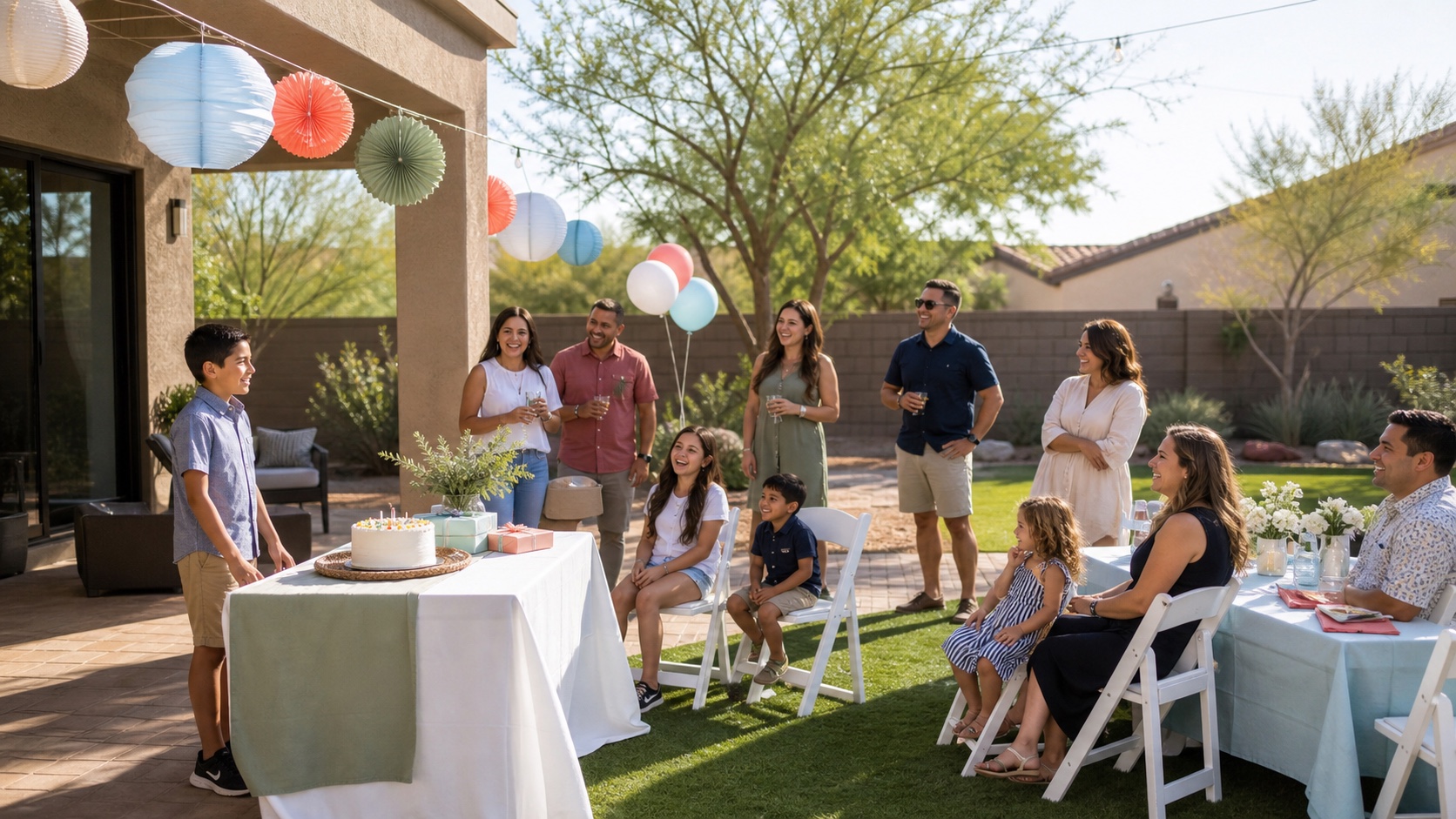
The cake is ready, the kids are still playing, and half the adults have started checking the time. A birthday party can feel rushed and strangely long in the same afternoon when the schedule has no center.
For most children’s birthday parties, plan 90 minutes to two hours. Older children, mixed-age backyard gatherings, and activity-heavy parties may need two to three hours. Start with the shortest window that can hold the experience you promised. Then build backward and forward from the cake, meal, movie start, or other moment you most want everyone to share.
Quick answer
One hour can be enough for babies and toddlers. About 90 minutes works well for many preschool parties. Two hours is a strong default for elementary-age birthdays. Use two to three hours for older children or mixed-age family gatherings, and state both the start and end time on the invitation.
Start With a Birthday Party Length That Fits the Guests
Age, venue, meal, activity, guest mix, and time of day all change what feels comfortable. Use these ranges as starting points, not promises:
| Party type | Practical starting range | Why it often works |
|---|---|---|
| Baby or young toddler celebration | 60 to 90 minutes | Protects naps, meals, and limited tolerance for stimulation |
| Preschool birthday | About 90 minutes | Holds arrival, simple play, food, and cake |
| Elementary-age birthday | About 2 hours | Allows play, food, cake, and goodbyes before energy drops |
| Tween or teen activity party | 2 to 3 hours | Fits a longer activity, meal, or movie |
| Mixed-age backyard family party | 2.5 to 3 hours | Allows family visiting with a shorter child-focused portion |
| Adult or open-house birthday | 3 to 4 hours | Supports staggered arrivals when the format is clear |
PBS KIDS offers similar age-specific guidance for young children in its age-by-age birthday party guide. Your child and guest list may need something different, especially when naps, sensory needs, travel, or a venue time limit are involved.
A longer party is not automatically more generous. If the last hour has no purpose, guests feel the drag and the host inherits more food, supervision, and cleanup.
Use the EventRent AZ Centerpiece Clock
Most party timelines begin at the arrival time and keep adding activities. The Centerpiece Clock begins with the one moment the day is built to protect.
That centerpiece might be:
- singing and cake
- a meal
- a scheduled entertainer
- a piñata or group game
- the start of a backyard movie
- a toast, announcement, or family photo
Then build the schedule in four steps.
1. Give arrivals a soft landing
Set aside 15 to 25 minutes for greetings and late arrivals. Use an activity guests can join without instructions, such as coloring, bubbles, music, or open play.
Do not schedule the most important moment here. Some families will still be parking, settling younger children, or finding the backyard.
2. Place one main activity before the centerpiece
Choose one organized block that earns its time. For a two-hour party, 30 to 40 minutes is usually enough for a game, craft, entertainer, or activity rotation.
If the schedule needs four separate organized games, the problem may be the list, not the party length.
3. Protect the centerpiece
Give the cake, meal, or other shared moment a real start time and 20 to 30 minutes of breathing room. This is the point when photos happen, guests gather, and the birthday child gets everyone’s attention.
If food is substantial, use the EventRent AZ guide to plan how much party food the guest list actually needs before locking the serving window.
4. End with flexible play, not another obligation
Leave 20 to 30 minutes after the centerpiece for open play, conversation, favors, and natural goodbyes. This lets guests leave without interrupting a formal activity.
End the invitation at the end of this block. Keep teardown and host cleanup outside the guest-facing duration.
A Two-Hour Birthday Party Schedule That Has Room to Breathe
Here is a practical example for a 2:00 to 4:00 p.m. elementary-age backyard birthday:
| Time | Plan | Host cue |
|---|---|---|
| 2:00 to 2:20 | Arrivals and open play | Greet families and point out drinks, restrooms, and activity areas |
| 2:20 to 3:00 | Main activity or game rotation | Keep one backup activity available, not scheduled |
| 3:00 to 3:20 | Food or substantial snack | Begin before the group is overtired or overly hungry |
| 3:20 to 3:40 | Cake, song, and photos | The Centerpiece Clock moment |
| 3:40 to 4:00 | Open play, favors, and goodbyes | Lower the music and make the ending easy to read |
If the children are happily engaged, let one block run a few minutes long and shorten the next flexible block.
Do not solve every delay by moving the end time. Protect the centerpiece first, then remove a lower-value activity.
Adjust the Duration With Five Honest Questions
Before printing the invitations, check five things:
- Youngest guests: Can they comfortably handle the full window?
- Invitation promise: Does a movie, pool session, craft, or tournament have enough time?
- Food: Does the plan include a meal or only cake and a snack?
- Venue clock: Have you included check-in, transitions, and the required exit time?
- Host workload: Are setup and cleanup separate from guest time?
If added time changes the food, entertainment, venue, or rental cost, test the full plan with the EventRent AZ party budget calculator before committing.
In Arizona, Change the Event Window Instead of Stretching It
For an East Valley outdoor birthday, the safest and most comfortable plan may be indoors, especially during the hottest part of the year. Do not schedule a long afternoon party and expect everyone to wait outside for the temperature to improve.
Check the location-specific forecast and current NWS Phoenix HeatRisk and heat guidance. If conditions are not appropriate for the planned guests and activities, move indoors, change the start time, shorten outdoor exposure, or reschedule. A generic “evening party” rule is not a safety decision.
For a July child’s birthday, consider Arizona birthday ideas designed for indoor or heat-aware planning. The party can still feel special without making outdoor endurance part of the celebration.
Any heat, weather, pool, child-supervision, or accessibility plan requires qualified human review for the actual guests, property, and forecast.
Cut These Things Before You Add Another Hour
When the schedule feels crowded, cut friction before extending the invitation:
- a second formal game that repeats the first
- gift opening when the birthday child would rather play
- a complicated transition between the house and yard
- a long group photo setup
- decor-dependent activities that need adult repair
- a separate favor ceremony instead of handing favors out at goodbye
Guests remember the shared moment and how the party felt. They rarely miss the fourth activity that never made the schedule.
Put both the start and end time on the invitation. Add a cue when useful, such as “open house,” “movie begins at 7:30,” or “cake at 3:20.” Clear timing helps families plan.
A good party ends while people still want a little more.
The best duration is not the maximum time your space can hold guests. It is the shortest window that lets people arrive, connect, enjoy the main experience, celebrate the birthday person, and leave without feeling pushed.
Choose the range. Protect one centerpiece. Give the ending room to feel natural. When the clock serves the moment, the party feels full instead of long.
Birthday Party Duration FAQ
Is two hours enough for a birthday party?
Yes. It can hold arrivals, one main activity, food, cake, and goodbyes. A movie, tournament, or mixed-age gathering may need more time.
How long should a toddler birthday party last?
Start with 60 to 90 minutes and plan around naps, meals, and the child’s normal tolerance for stimulation.
Should a birthday invitation include an end time?
Yes. It helps families plan and makes the host’s expectations clear. For an open house, list and label the full arrival window.
How early should guests arrive before the main activity?
Build 15 to 25 minutes into the invitation time. Ask for earlier arrival only when a venue or activity has a real check-in requirement.
For a teen birthday, agree on teen ownership, parent boundaries, and a clear ending before setting the schedule: Teen Birthday Party Ideas: A Parent's No-Cringe Plan
When two siblings share the date, protect both celebrations with this joint-party framework: Joint Birthday Party for Siblings: A Fair, Fun Plan
Before the invitation goes out, decide whether parents stay, drop off, or choose with the host: Do Parents Stay at Kids’ Birthday Parties? A Clear Host Guide