Family Event Planning
10 Family Reunion Ideas That Bring Every Generation Together
Use the Three-Generation Test and One Memory, One Movement, One Meal Plan to build a reunion children, adults, and older relatives can enjoy together.
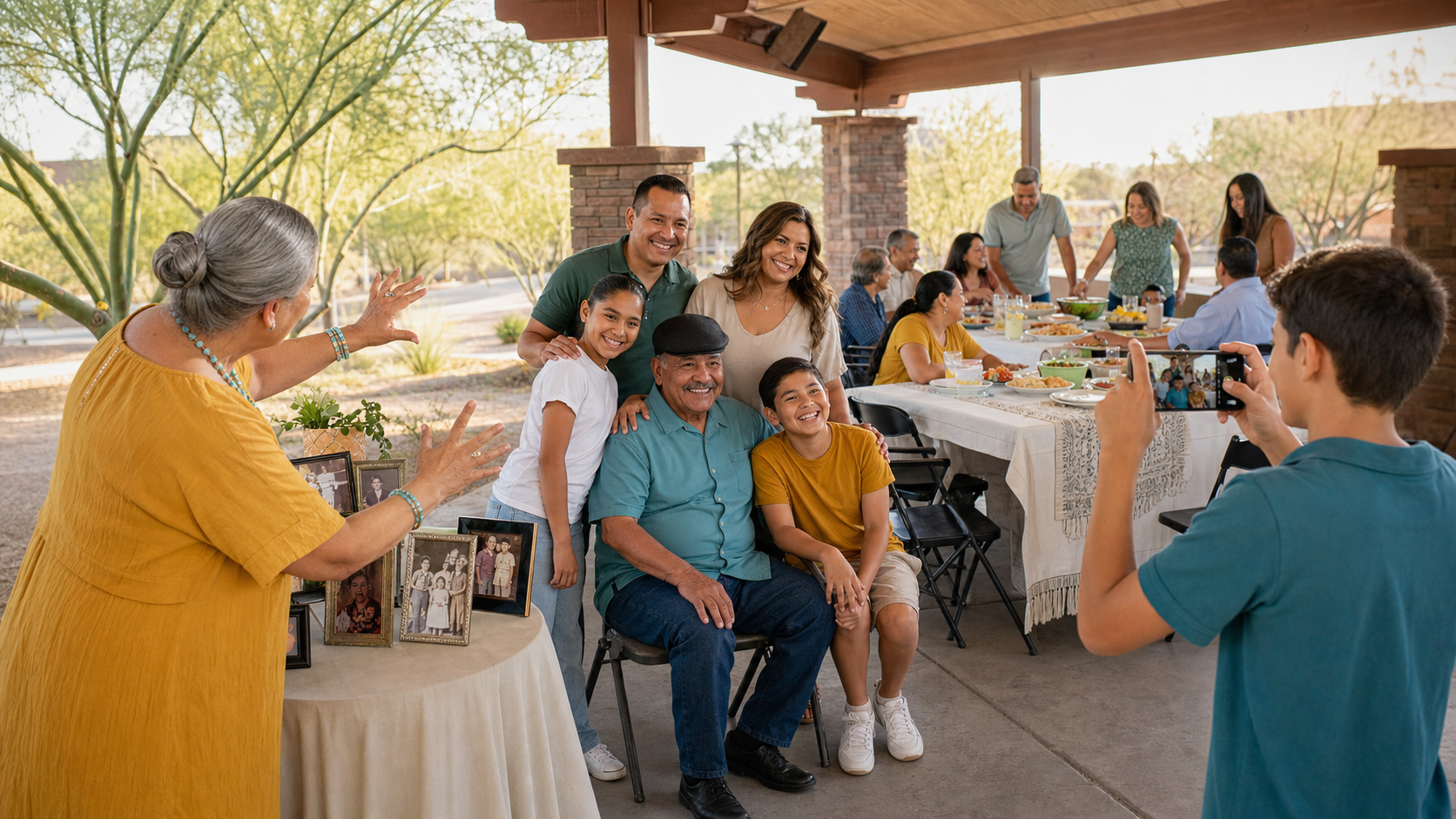
The family group chat can fill with ideas in an afternoon. Someone wants games. Someone wants a long meal. The teenagers want to know who else is coming, the little kids need room to move, and an older relative quietly asks whether there will be somewhere comfortable to sit.
A good family reunion does not make every person do the same thing. It gives every generation an easy way to belong. Choose one memory activity, one optional movement activity, and one shared meal. Let people move between conversation, play, food, and rest without waiting for the next announcement. That simple structure creates a reunion people can enjoy at their own pace.
Quick answer
Use the EventRent AZ Three-Generation Test before committing to an idea: can a child join, can a busy adult participate without running the whole activity, and can an older relative comfortably take part or watch? Then build the day with the One Memory, One Movement, One Meal Plan. You do not need all ten ideas below. Choose three that work together.
More Activities Do Not Automatically Create More Connection
The reunion is not a camp schedule. Most relatives came to talk, eat, see who grew six inches, hear the old stories again, and meet the people whose names they know from family updates.
Too many scheduled activities can break those conversations just as they become interesting. They also put the host in the role of cruise director, calling everyone together every 20 minutes while missing the reunion they planned.
Plan a few strong invitations, not a full day of obligations. An invitation might be a table of old photos, a yard game already set up, a shaded chair beside someone worth meeting, or a meal that brings everyone together once. Guests can say yes without the whole room saying yes at the same time.
Run the Three-Generation Test Before You Buy Supplies
EventRent AZ's original Three-Generation Test is a quick way to find the holes in a reunion plan. Picture three people on the guest list:
- A child who needs something clear to do. Can they begin without a long explanation or constant adult help?
- An adult carrying family responsibilities. Can they join while also checking on a child, greeting relatives, or helping with food?
- An older relative or guest with lower energy. Can they participate, contribute, or watch from a comfortable place without crossing rough ground or standing for a long time?
An idea does not need identical participation from all three people. A photo recreation may put children in front of the camera, an older relative in the director's chair, and adults behind the phone. A yard game can include players, scorekeepers, coaches, and spectators.
The goal is not equal activity. The goal is equal permission to belong. If an idea works only for one age group, keep it as a small side option and pair it with something that opens the reunion back up.
Compare 10 Family Reunion Ideas by the Job They Do
Use this selector to find two or three ideas that complement one another. Avoid choosing three ideas that all require supplies, instructions, and a scheduled start.
| Family reunion idea | What it gives guests | Easiest way to join | Host watchout |
|---|---|---|---|
| Family photo and story walk | Shared history and conversation starters | Browse one photo at a time | Confirm names, dates, and photo permission |
| Recipe potluck with story cards | A meal plus family tradition | Bring, taste, or read | Label ingredients and assign food coordination |
| Open yard-game area | Movement and casual competition | Play, keep score, or watch | Protect clear play lanes and walking paths |
| Where-we-live map | A picture of how the family has spread | Add one pin or note | Do not display private addresses |
| Then-and-now photo recreation | Laughter and a new keepsake | Pose, direct, or photograph | Choose only kind, comfortable photos |
| Family service table | A shared purpose | Complete one small task | Confirm the receiving group's real needs first |
| All-ages playlist and dance break | Energy without a tournament | Request a song, dance, or listen | Keep volume low enough for conversation |
| Cousin maker table | A calm activity for children and creative adults | Make one simple item | Use age-appropriate supplies and easy cleanup |
| Long-table meal and short toast | The main shared moment | Eat, listen, and reconnect | Keep announcements brief and seating flexible |
| Backyard movie finale | A relaxed evening extension | Watch, snack, or leave after dinner | Test sound, sightlines, timing, and permission |
Choose Activities People Can Join at Their Own Pace
1. Turn Family Photos Into a Story Walk
Print a small set of photos from different decades and place them along a wall, covered patio, or row of tables. Add short captions, but leave room for relatives to correct a date or add what happened just outside the frame.
This works because the activity begins conversations instead of replacing them. A child can look for a grandparent as a teenager. A cousin can explain a hometown. Someone who does not want to speak to the room can still tell one story to the person beside them.
2. Make the Meal Part of the Family Story
Ask a few households to bring a dish connected to a person, place, or tradition. Put a small card beside each dish with the name and one sentence about why it matters.
Keep the assignment list short and coordinated. The reunion does not need 14 desserts and no main dish. Give guests an easy way to share ingredient and allergy information, provide an alternative for people who cannot contribute food, and decide who is responsible for safe transport, service, and leftovers.
3. Open a Yard-Game Area Without Scheduling a Tournament
Set up one or two activities that people already understand, then let the games stay open. Short turns are easier to join than a bracket that requires everyone to arrive on time.
Build more than a playing area. Add a few chairs for spectators, keep the throwing or stacking zone away from food and main walkways, and make it easy for someone to keep score without playing. If a game zone suits your family, review the current EventRent AZ giant yard-game options, then confirm availability, rules, clearances, surfaces, and suitability for the actual guests.
4. Show Where the Family Lives Now
Use a large state, country, or world map and invite each household to add a pin at the city level. Nearby cards can answer a light prompt such as “What do you love about home?” or “What should family visit for?”
This gives younger relatives a visual way to understand the family and helps adults discover possible visits or shared hometowns. Protect privacy by stopping at the city or region. Do not post street addresses, travel schedules, or contact details on a public display.
5. Recreate One Old Family Photo
Choose one or two photos with a manageable number of people and recreate the pose. The funniest part is often the setup, when relatives debate who stood where and whether anyone still owns that hat.
Keep it affectionate. Skip images that could embarrass someone, require unsafe poses, or turn appearance into the joke. Let a relative who remembers the original direct the scene. Share the finished photo only with permission from everyone pictured.
6. Add a Small Family Service Project
A service table can give the reunion a shared purpose without taking over the day. Families might assemble cards, sort donated items, or complete another short task requested by a local school, shelter, library, or community organization.
Contact the recipient first. Ask what is useful, how items should be prepared, and when they can be delivered. The meaningful version meets a real need. The cluttered version creates boxes someone must later figure out how to donate.
7. Let the Family Build the Playlist
Ask several generations for two songs each before the reunion. Mix familiar favorites with songs that make people ask, “Who picked this?” A short dance break can lift the afternoon without demanding a performance.
Keep the sound level friendly to conversation and place speakers away from the quietest seating. A guest can dance, request a song, tell the story behind it, or simply listen. The playlist should make the reunion feel more like the family, not more like a production.
8. Keep One Maker Table Simple
Give children and creative adults one project that takes about ten minutes and does not require a staff member. Decorating a family bookmark, drawing a favorite reunion memory, or making a simple photo-frame insert can work.
Pre-sort supplies, show one example, and keep the project open-ended. Avoid glitter, permanent paint, sharp tools, or complicated drying when the venue and guest list do not support them. The maker table is a calm side space, not a test of craft skill.
9. Make the Shared Meal the Main Event
Instead of filling the schedule, make the meal feel worth gathering for. Seat relatives so conversations can cross household lines, leave room for mobility devices and caregivers, and give children an easy path to food and a return trip to their seats.
Keep the welcome and toast short. Name the reason everyone is together, thank the people who helped, honor someone when appropriate, and let the room get back to talking. A reunion can be successful even if the meal is the only moment everyone shares at once.
10. End With a Movie, Slideshow, or Family Video
An evening finale works well when it feels optional. Families with younger children can leave after dinner, while others settle in for a movie, a short edited slideshow, or a collection of family video clips.
Do not make guests sit through an unedited archive. Keep family media concise and obtain permission before showing sensitive or private material. For an outdoor feature, use the complete Arizona backyard movie night planning guide to check screen placement, sound, seating, timing, testing, and a backup plan.
Build the One Memory, One Movement, One Meal Plan
The easiest way to turn the list into a reunion is to select three anchors:
- One memory: Choose the photo walk, recipe stories, map, or then-and-now photo. This gives relatives something meaningful to talk about.
- One movement: Choose open yard games, a short dance break, a walk, or another optional activity. This gives restless guests a change of energy.
- One meal: Choose the moment everyone is invited to share. It can be a potluck, catered lunch, cookout, or dessert gathering.
Everything else is support. Seating supports the stories. Shade or indoor space supports comfort. A drink station supports the meal. A clear path connects the quiet and active areas.
If the reunion already has one strong choice in each category, stop adding. Use the extra planning time to confirm names, make introductions, prepare the food plan, test the speaker, and ask someone else to own a job.
Pick an East Valley Location That Serves Every Age
A family home is personal and flexible, but it can also make one household carry every setup, parking, cleanup, and restroom decision. A public ramada gives children room to move, while a community room offers climate control and easier indoor seating. A private venue may reduce setup work but adds rules, cost, and time limits.
Compare the places that fit the family, not just the places that photograph well. Look at arrival distance, parking, accessible routes, restrooms, seating, food permissions, power, sound rules, shade or indoor backup, setup time, cleanup, and what happens if the guest count changes.
For local options, start with the EventRent AZ guide to East Valley party and event venues. If a Mesa park or recreation facility is a possibility, review the current City of Mesa facility reservation and permit information. Verify the exact site's capacity, amenities, fees, vendor rules, permits, and current policies directly with the owner or agency before booking.
Use a Relaxed Four-Hour Reunion Flow
This sample flow gives the day shape without turning it into a program:
- First 45 minutes: Arrival, drinks, introductions, and the memory activity already open.
- Next 45 minutes: Optional movement activity, continued conversation, and final meal setup.
- Next 75 minutes: Shared meal, a brief welcome, and one short toast or story.
- Next 45 minutes: Photos, dessert, music, and open activities.
- Final 30 minutes: Easy goodbyes, leftover handoff, and an optional movie or smaller evening extension.
Adjust the length to the travel, ages, venue, and family rhythm. Do not hold the meal for every late arrival. Tell people when food will be served, keep a plate for a delayed household when practical, and protect the relaxed middle of the reunion from too many announcements.
If several households are sharing costs, put the full plan into the free EventRent AZ party budget calculator before deposits and supply runs begin. Use the result as a planning conversation, not as a promise of final vendor prices.
Hand Off Jobs Before the Reunion Begins
One person can start the family text. One person should not run the entire reunion.
Assign five small roles before event day:
- Welcome person: notices new arrivals and makes introductions.
- Food lead: knows what is coming, where it goes, and when it is served.
- Memory lead: sets up photos, captions, cards, and safe storage.
- Activity lead: checks supplies and keeps the active area clear.
- Closing lead: manages leftovers, borrowed items, trash, and final photos.
Roles can be shared, and not every reunion needs all five. The point is to remove invisible jobs from the host's head. The plan is finished when the host has room to sit down, eat, and hear a family story too.
Frequently Asked Questions
What are the best family reunion activities for all ages?
The strongest activities offer more than one way to participate. Photo displays, recipe stories, open yard games, music, simple maker tables, shared meals, and short photo recreations let guests play, watch, contribute, or step away without disrupting the group.
How many activities should a family reunion have?
For a one-day gathering, start with one memory activity, one optional movement activity, and one shared meal. Add another activity only when it serves a clear guest need and has a named person responsible for it.
How long should a family reunion last?
A local one-day reunion can work well as a relaxed three- to five-hour gathering. Travel, young children's routines, older guests' energy, meal timing, and venue limits matter more than a universal duration. State the meal time and the main shared moment clearly so guests can plan.
What if some relatives do not want to play games?
Do not build the reunion around compulsory games. Keep activities open, add comfortable spectator seating, protect conversation areas, and make the meal or family story the shared anchor. Watching, talking, taking photos, and helping a child are valid ways to participate.
Make It Easy to Belong
The reunion does not need to prove how creative the planning committee can be. It needs to help relatives find one another again.
Choose one memory, one movement, and one meal. Give every generation a comfortable way in, then leave enough open space for the stories nobody could have scheduled.