Small Business Events
9 Grand Opening Ideas That Give Customers a Reason to Come Back
Use the Door-to-Return Walkthrough to help visitors arrive easily, experience the business, and leave with a clear reason to come back.
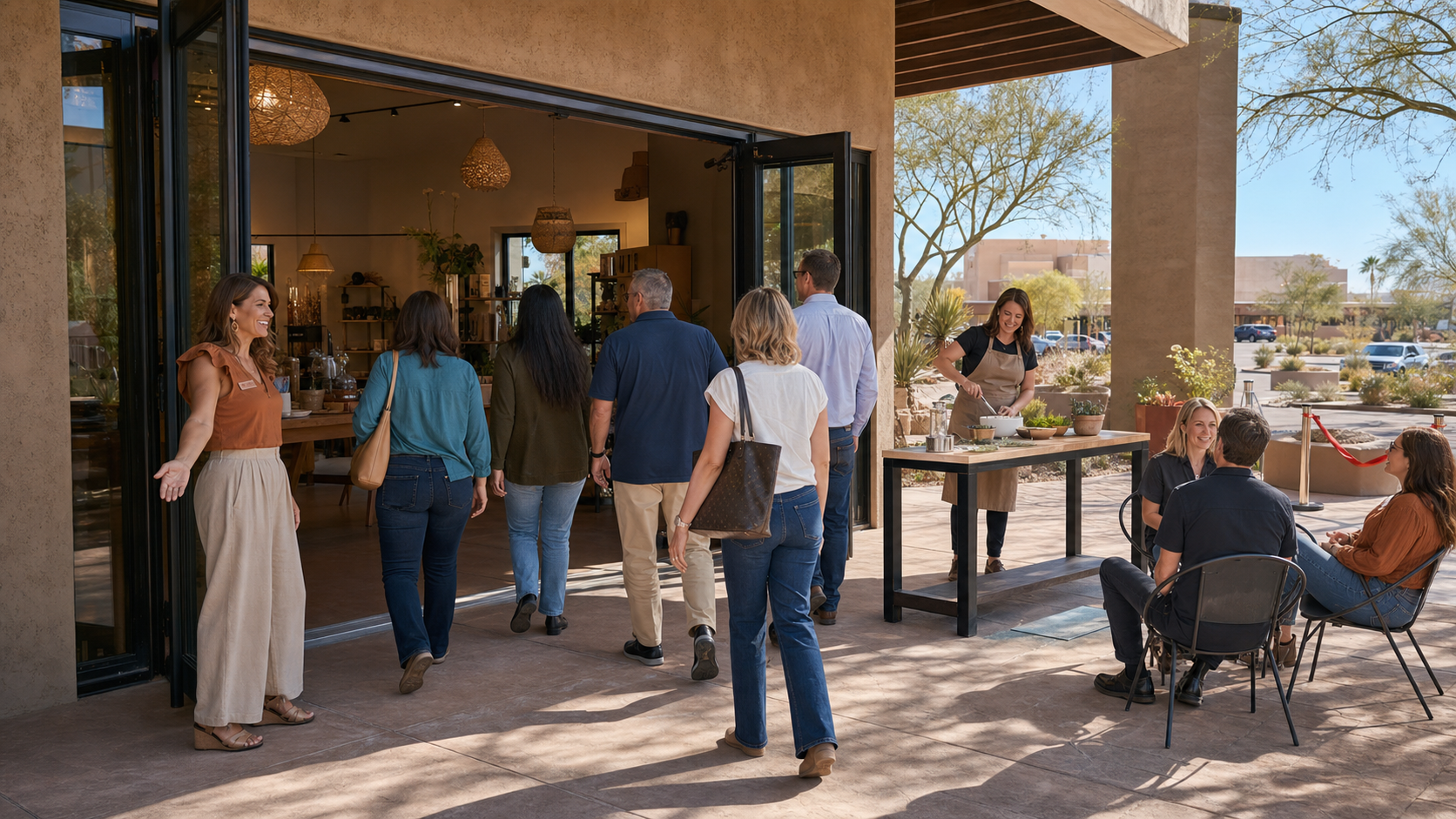
You can spend weeks planning balloons, snacks, music, and a ribbon cutting, then watch new visitors leave without really understanding the business. That is the quiet fear behind a grand opening: plenty of activity, but no lasting connection.
The fix is to plan the event from the front door forward. Give every visitor an easy way to arrive, one meaningful way to experience what the business does, and one clear reason to return. The ideas below build those three moments without turning your opening into an exhausting production.
Quick answer
The best grand opening ideas are not the loudest. Start with one promise you want a first-time visitor to understand. Then design the event around three moments: arrive, experience, and remember. Make the entrance obvious, let people sample the value of the business, and give them a specific next step before they leave.
Start with one promise, not a pile of activities
Before choosing food, decor, entertainment, or giveaways, finish this sentence:
When someone leaves our grand opening, we want them to say, “This is the place to ______.”
A bookstore might want guests to think, “find my next favorite local read.” A fitness studio might choose, “try a welcoming class without feeling intimidated.” A home-services business might choose, “get a straightforward answer from someone local.”
That sentence becomes the filter for every idea. If an activity helps a visitor understand the promise, keep it. If it only makes the schedule busier, simplify it or let it go.
This approach also keeps the event from feeling like an unrelated party attached to a business. Guests can still have fun. They simply leave with a clearer connection between the fun and the reason the doors opened.
Use the Door-to-Return Walkthrough before you buy anything
The Door-to-Return Walkthrough is a simple EventRent AZ planning tool. Walk the event in your mind as someone who has never visited, does not know the staff, and may only stay for 15 minutes.
| Visitor moment | Question to answer | Practical setup | Failure to prevent |
|---|---|---|---|
| Arrive | Where do I enter, what is happening, and where do I begin? | Visible welcome point, simple sign, greeter, clear path, parking note | Guests hovering at the edge or leaving because the event feels confusing |
| Experience | What can I try, watch, taste, learn, or ask that shows why this business matters? | Short demonstration, sample, mini consultation, tour, guided activity | Entertainment that attracts attention but never reveals the business |
| Remember | What should I know, keep, book, follow, or return for? | One next-step card, future date, useful offer, QR code, staff invitation | Guests leaving with a free item but no reason to reconnect |
Now physically walk the site if you can. Start where a guest parks or steps off the sidewalk. Continue through the welcome point, the main experience, restrooms, seating, food, and exit. Notice where people might stop, cross paths, miss a sign, or accidentally block normal customers.
If the event is away from your usual location, the East Valley party and event venue guide includes practical booking questions about access time, outside vendors, included furniture, food, music, and cleanup.
Choose ideas that let visitors experience the business
You do not need all nine ideas. Choose one primary experience, then add only the support pieces that make it easier to join.
1. Offer a tiny version of the real experience
Let guests sample the value in a form they can finish quickly. That could be a five-minute demonstration, a small tasting, a product try-on, a mini lesson, a short assessment, a behind-the-scenes look, or a guided comparison.
Keep the experience short enough that a newcomer can join without committing the rest of the afternoon. The goal is not to show everything. It is to help the right visitor understand the most useful thing.
2. Run a repeating demonstration
Instead of one scheduled presentation that late arrivals miss, repeat a short demonstration several times. Post the next start time at the welcome point so guests can browse, talk, or grab a drink without wondering when something will happen.
Give the demonstration one takeaway. A bakery might show one decorating technique. A retailer might compare three options for a common need. A studio might teach one movement or creative skill. A service company might show what it checks before recommending work.
3. Create an ask-us-anything table
Some visitors want a conversation more than an activity. Set one small table aside for honest questions, quick recommendations, or appointment help. Place it away from the entrance so people can stop without blocking arrivals.
Use a sign that names the questions you can actually answer. Avoid promising free professional advice beyond the staff's qualifications.
4. Invite one complementary local partner
A well-matched partner can make the event more useful and introduce the business to an adjacent audience. Choose a business that serves the same community without confusing the main promise.
Agree in advance on space, promotion, sales, lead collection, insurance, power, cleanup, and what each business will tell guests. One thoughtful partner is often easier to understand than a row of unrelated vendors.
5. Give children or companions a clear place to participate
If your ideal customer may arrive with family, create a simple activity that lets everyone stay comfortably. A coloring prompt, building activity, scavenger card, photo moment, or properly spaced game can work when it fits the business and property.
Keep the activity visible to caregivers, outside primary walkways, and separate from food, doors, parking movement, and business demonstrations. Confirm supervision and safety expectations with the property and human reviewer.
6. Turn the ribbon cutting into the beginning, not the whole event
A ribbon cutting creates a shared moment and a useful photo, but visitors still need something to do next. Follow it immediately with a tour, demonstration, tasting, or invitation to meet the team.
Local chambers may offer ribbon-cutting support for qualifying members. The Mesa Chamber of Commerce and Chandler Chamber ribbon-cutting page are useful starting points for businesses in those cities. Confirm current membership, scheduling, promotion, and participation details directly.
7. Use a giveaway that continues the experience
The most useful giveaway helps the visitor use, remember, or return to the business. Think of a small sample, checklist, care card, class pass, future appointment prompt, or locally relevant resource.
If you use a drawing or contest, have a human reviewer confirm the rules, eligibility, disclosures, entry method, privacy language, and any legal requirements. Do not collect contact information without clearly explaining what the person is joining.
8. Build one comfortable pause point
Not everyone wants to move continuously. A few chairs, a small conversation table, water, or a shaded waiting spot can help older guests, families, business neighbors, and people waiting for a demonstration stay longer without feeling trapped.
Place the pause point where seated guests can see the activity without narrowing the main path. If you need to estimate event costs before committing to extras, the EventRent AZ party budget calculator can help you label assumptions and compare priorities. Treat its numbers as planning estimates, not quotes.
9. Announce one specific reason to return
“Follow us for updates” is easy to ignore. Give visitors a concrete next moment: the first workshop, a community night, a limited service window, a new product arrival, a future tasting, or the regular day a useful activity happens.
Put that next moment on the exit sign, handout, receipt, or follow-up message. Make sure the date and offer are real, approved, and something the business can deliver.
Check local approvals before you advertise the event
A grand opening inside a business's normal operating space may be simple. An event that expands into a parking lot, sidewalk, public space, temporary structure, alcohol service, amplified entertainment, food-vendor area, or unusual promotional activity may not be.
Requirements depend on the city, site, property permission, size, activities, and existing approvals. The City of Mesa says some special-event processing can take up to 90 days and recommends starting before advertising. Chandler's current private-property TSPE guidance calls for submission 60 days ahead to avoid expedited fees and says applications 19 days or less before an event will not be accepted. Review the City of Mesa special-event license guidance or City of Chandler private-property TSPE guidance when relevant, then confirm your exact plan with the city and property.
Do not assume another East Valley city uses the same process or lead time. Human review should also confirm fire, tent or canopy, food, liquor, signage, music, accessibility, insurance, traffic, photography, child-safety, and vendor requirements as applicable.
Use a planning rhythm that protects the business opening
The opening celebration should not make the actual business harder to operate. Use this as a default rhythm, then move the work earlier when local approvals, construction, vendors, or chamber scheduling require it.
Before committing to the public date: confirm occupancy or operating readiness, property permission, local approval needs, insurance, budget, staffing, and what must remain available for normal business.
About six weeks before: choose the visitor promise, primary experience, guest path, partner, and follow-up action. If approval guidance requires more lead time, that requirement controls the schedule.
Four weeks before: finalize the invitation or event listing, signs, supplies, rentals, food plan, staffing, parking message, accessibility plan, and photo permissions. The party invitation timing guide can help separate the initial invitation, RSVP point, and reminder.
Two weeks before: test the experience with a small group, confirm every vendor and staff role, and remove anything that takes more explanation than it gives back.
Two days before: walk the Door-to-Return route, check signs from the parking area, test the demonstration, prepare the next-step materials, and confirm the cleanup plan.
The next business day: thank partners and attendees where appropriate, share approved photos, answer promised questions, record what visitors asked, and invite people to the specific next moment you announced.
Hand off the event so the owner can meet people
The owner should not be the only person who knows where the tape, water, vendor contact, sign-in instructions, or cleanup supplies are. Use this short handoff before doors open:
- Arrival lead: watches parking and the entrance, greets visitors, explains the first step, and notices accessibility barriers.
- Experience lead: runs the demonstration or activity, tracks the next start time, and keeps the business promise clear.
- Operations lead: handles vendors, supplies, food, restrooms, spills, trash, power, and property questions.
- Owner or host: welcomes people, tells the business story, listens to questions, and makes real connections.
- Follow-up lead: protects consent, records only approved information, organizes photos, and sends promised next steps.
- Everyone: knows the emergency contact, stop conditions, guest boundaries, cleanup time, and who can change the plan.
Do one final walk five minutes before opening. Look for a blocked door, unreadable sign, exposed cord, crowded table, missing chair, confusing check-in, or staff member who still does not know their role.
A grand opening does not need to prove everything in one day. It needs to help the right visitor feel welcome, understand the business, and leave with a genuine reason to return. Plan those three moments first, and the food, signs, seating, photos, and celebration can support the story instead of competing with it.
After the opening event, keep the relationship warm with a customer-first appreciation format: 7 Customer Appreciation Event Ideas for Small Businesses