Party Planning
How to Set Up a Buffet Table So Guests Keep Moving
Use one clear starting point, one-way food flow, a separate drink station, and a five-minute plate test to keep guests moving.
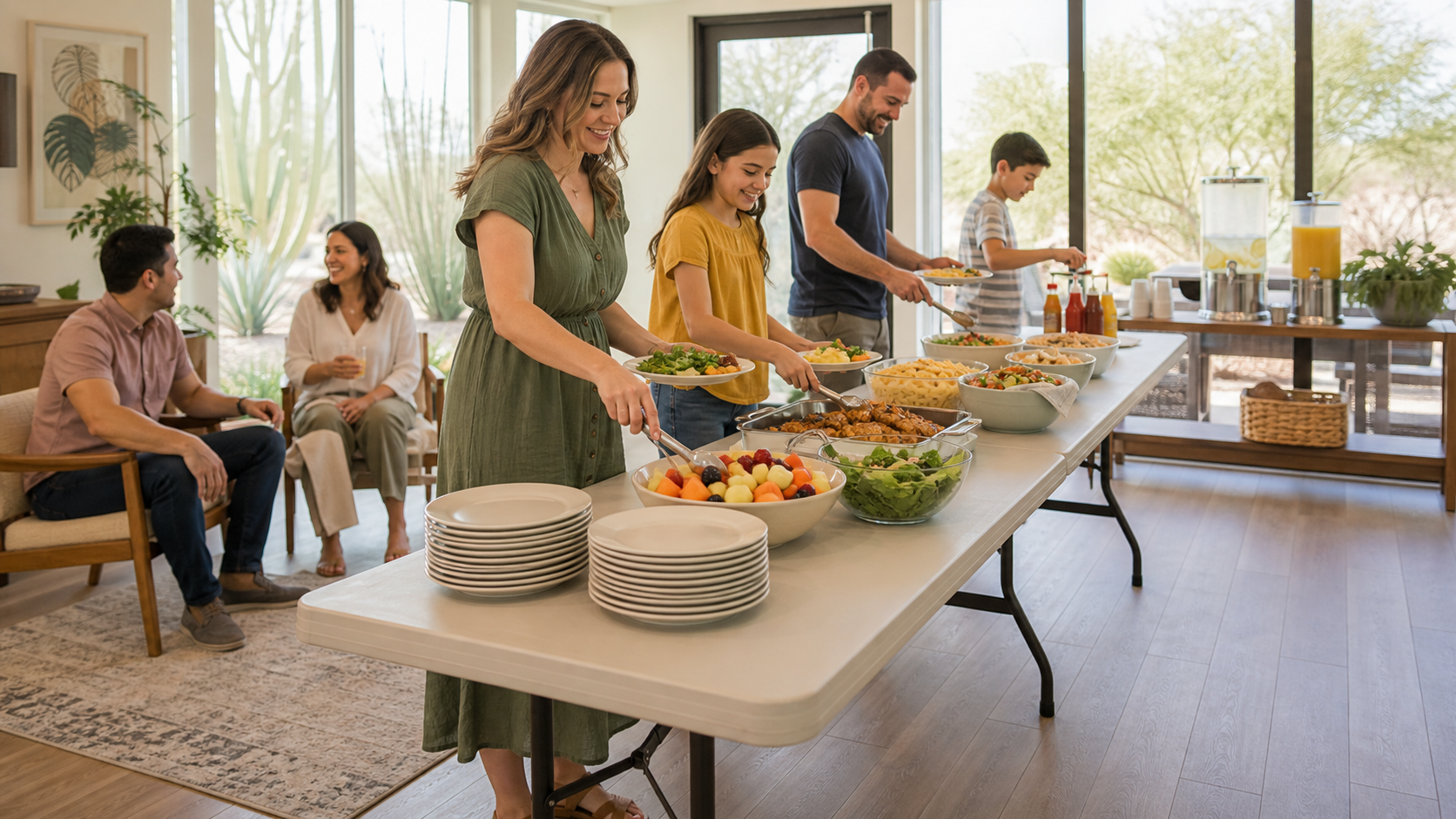
The food is ready. The first guest picks up a plate, pauses, and asks where the forks are. Someone else reaches across the table for salsa while a third person tries to leave the line with a drink balanced against a full plate. A buffet was supposed to make hosting easier, but the whole party is now standing in one corner.
Set up a buffet as a one-way trip: plates first, food in the order guests will take it, condiments last, then a clear exit toward drinks and seating. Keep beverages, desserts, refills, and trash outside the main line whenever space allows. Before guests arrive, carry an empty plate through the route once. If you have to double back, squeeze past a chair, or cross the kitchen refill path, move something.
Quick answer
A smooth buffet needs one obvious starting point, one direction of travel, a separate drink stop, and an exit that does not send guests back through the line. The best-looking setup is the one people can understand without asking the host.
Put the buffet where a line can form without blocking the party
Start with the room, not the serving dishes. A beautiful buffet in the wrong place can block the kitchen, trap seated guests, or make every person walk through the same doorway twice.
Stand where you expect the line to begin and look behind you. Can two or three people wait there without blocking an entrance, bathroom path, refrigerator, or seated guest? Then look at the far end. Can a person with a full plate leave without turning around and walking back through the line?
The start and finish matter more than the center of the table. If either end leads into a wall, doorway, or cluster of chairs, the line will fold back on itself.
| Possible buffet location | Best use | Watch for |
|---|---|---|
| Along a wall | Small home party with one clear serving side | Leave room at both ends so the start and exit stay visible |
| Kitchen island | Small group with food prepared nearby | Keep the cook's side clear and move drinks elsewhere |
| Freestanding rectangular table | Larger party or room with open circulation | Decide whether service is one-sided or two-sided before placing dishes |
| Covered outdoor area | Backyard meal with indoor backup food | Use a stable surface and plan hot or cold holding before food comes outside |
If your party already feels tight, do not solve the buffet by borrowing space from guest seating without checking the full layout. The EventRent AZ table and chair planning guide helps you account for seating, support tables, and real walking space before the room is full.
Arrange the buffet in the order a guest actually builds a plate
Once the location works, make the order feel obvious. People should not have to scan the entire table before deciding where to begin.
A practical sequence is:
- Plates
- Main dish or plate anchor
- Sides and salads
- Bread or small additions
- Sauces and condiments
- A clear place to leave the line
This order is not a law. A taco bar, brunch spread, dessert buffet, or potluck may need a different sequence. The question is always the same: What does a guest need first, and what choice naturally comes next?
Put a serving utensil with every dish before guests arrive. Keep handles facing the guest side, and avoid decor that forces people to reach over food. Small labels can answer repeated questions about a dish, but allergen information should be confirmed by the person who prepared or supplied the food. Do not guess.
If you are still deciding how much food belongs on the table, use the EventRent AZ party food planning guide for guest count, menu role, tray yield, and reserve planning. Quantity and layout are separate decisions, and both deserve a quick check.
Move drinks, utensils, and dessert out of the main food line
Drinks slow people down because guests stop to open bottles, add ice, pour, stir, and make room for a cup. They also require a free hand. Give drinks their own small station after the buffet exit, not between the plates and the main dishes.
Flatware and napkins can go at the exit so guests do not carry them while serving. If the menu includes food that may drip or requires a napkin immediately, place a small stack at the start and keep the main supply at the end.
Dessert usually works better as a later reveal on a separate surface. That keeps guests from taking cake while building a dinner plate, gives the host somewhere to stage candles or serving tools, and makes it easier to reset the room when dessert begins.
Trash and dish return also need their own destination. Put them near the natural path away from seating, but not beside the plates or clean utensils. A guest should be able to finish eating and clear a place without walking against the incoming food line.
For a potluck, the same flow starts before the party. The EventRent AZ potluck planning guide helps hosts coordinate what arrives, what each dish needs, where it lands, and how it leaves.
Use the EventRent AZ One-Way Plate Test
The One-Way Plate Test is a simple way to judge the whole setup before food hides the table surface.
| Guest step | Place or decision | What it prevents |
|---|---|---|
| Pick up | Plates at one unmistakable end | Guests entering from both directions by accident |
| Build | Food follows a natural plate-building order | Reaching, backtracking, and long pauses |
| Finish | Condiments and final toppings appear last | Guests carrying open sauces through the line |
| Exit | Open space leads away from the table | A full-plate collision at the end |
| Drink | Beverage station sits beyond the exit | Cups, ice, and pouring slowing food service |
| Sit | Seating is reachable without crossing the line | Guests cutting through incoming traffic |
| Clear | Trash or dish return has a separate path | Used plates moving toward clean food and utensils |
Now trace the host's route. Where will the second tray come from? Can you reach the back of the buffet without pushing through guests? Is there a clear place to set a hot or cold replacement dish before removing the old one?
Guest traffic and refill traffic should touch as little as possible. In a home, that may mean keeping the kitchen-facing side of an island off-limits to guests. At a clubhouse or venue, it may mean placing the buffet near a service door but pointing the guest exit toward seating.
The five-minute empty-plate walk-through
Before adding food, ask one person to carry an empty plate through the route while another pretends to refill a dish.
- Can the guest see where to start?
- Can a waiting person stand without blocking a door?
- Can the guest reach every serving utensil without leaning over another dish?
- Can the guest leave with a full plate and still get a drink?
- Can the host bring in a replacement platter without crossing the line?
- Can a child, older adult, or guest using a mobility device follow the route without a preventable squeeze point?
Fix the first awkward moment you notice. That one change often does more than another layer of decor.
Adapt the same plan to an East Valley home, clubhouse, or venue
At an East Valley home, the kitchen is usually the refill center. Keep the refrigerator, oven, and main preparation counter clear. If the buffet sits on an island, reserve one side for serving and the other for the host.
On a covered patio, keep the line on a stable, level surface. Avoid placing it beside a pool edge, grill, gate, or the only door into the house. Keep backup food inside or in proper hot or cold holding, then replace smaller serving dishes as needed.
At an HOA clubhouse or private venue, ask where outside food is permitted, which outlets may be used, how trash is handled, and when the room must be cleared. If you are still comparing locations, the EventRent AZ East Valley venue guide includes practical questions to confirm before booking.
For a larger buffet, two identical serving lanes may move guests faster, but only when the room, menu, and staff support them. Do not create a two-sided line by accident. If guests on opposite sides reach for the same dish or exit into each other, one clear lane is better.
Keep the food safe and the host out of the line
A smooth layout still needs a food-safety plan. The FDA recommends keeping hot foods at 140°F or warmer and cold foods at 40°F or colder. It also recommends small serving portions that can be replaced with fresh dishes instead of continually adding new food to a partly used dish.
The FDA's Serving Up Safe Buffets guidance says perishables should not remain at room temperature for more than two hours, or more than one hour when the temperature is above 90°F, unless they are being properly kept hot or cold. Use a food thermometer and follow the caterer, venue, or local health requirements that apply to the event.
Safety can also make hosting easier. Smaller platters keep the table from becoming overcrowded, let backup food stay protected, and create a clear reason to swap a dish instead of hovering over it.
Day-of buffet setup checklist
- One obvious start and one clear direction
- Plates at the start
- One serving utensil for every dish
- Food in a natural plate-building order
- Condiments at the end
- Drinks on a separate station
- Dessert held for its own moment when appropriate
- Labels confirmed by the food preparer
- Backup food and replacement dishes planned
- Hot and cold holding checked
- Trash or dish return away from clean food
- Empty-plate walk-through completed
Buffet setup FAQ
Should silverware go at the beginning or end of a buffet?
Usually at the end. Guests have an easier time serving when they are not balancing loose flatware and napkins on the plate. Keep a few napkins at the start only if the menu makes them immediately useful.
Should a buffet table be against a wall?
It can be, especially for a smaller one-sided line. Leave enough room at the start for guests to wait and enough room at the end for them to exit. A wall placement fails when the line blocks a door or traps guests at one end.
How do you prevent a buffet line from getting crowded?
Make the starting point obvious, remove drinks from the food line, put dishes in a natural order, keep serving utensils easy to reach, and protect the exit. For a larger event, release tables gradually or use two truly separate lanes only if the layout supports them.
What should go on a separate table?
Drinks are the first choice because pouring takes time and requires a free hand. Dessert, extra flatware, coffee, refills, and dish return can also move off the main buffet when space allows.
A good buffet does not need the host to explain it. Give every item a place, walk the route once, and let the setup quietly guide guests from an empty plate to a seat. That leaves you free to notice the part of the party that actually matters: people eating, talking, and enjoying the time together.
Before ordering linens for a rectangular serving table, compare the actual dimensions and the drop you want: Tablecloth Size for a 6-Foot Table: Chart & Fit Tips