Party Planning
How to Host a Backyard Game Night Everyone Can Join
Skip the giant game list. Use the First Yes Game Night Plan to help players, spectators, and conversation-first guests all find an easy way into the evening.
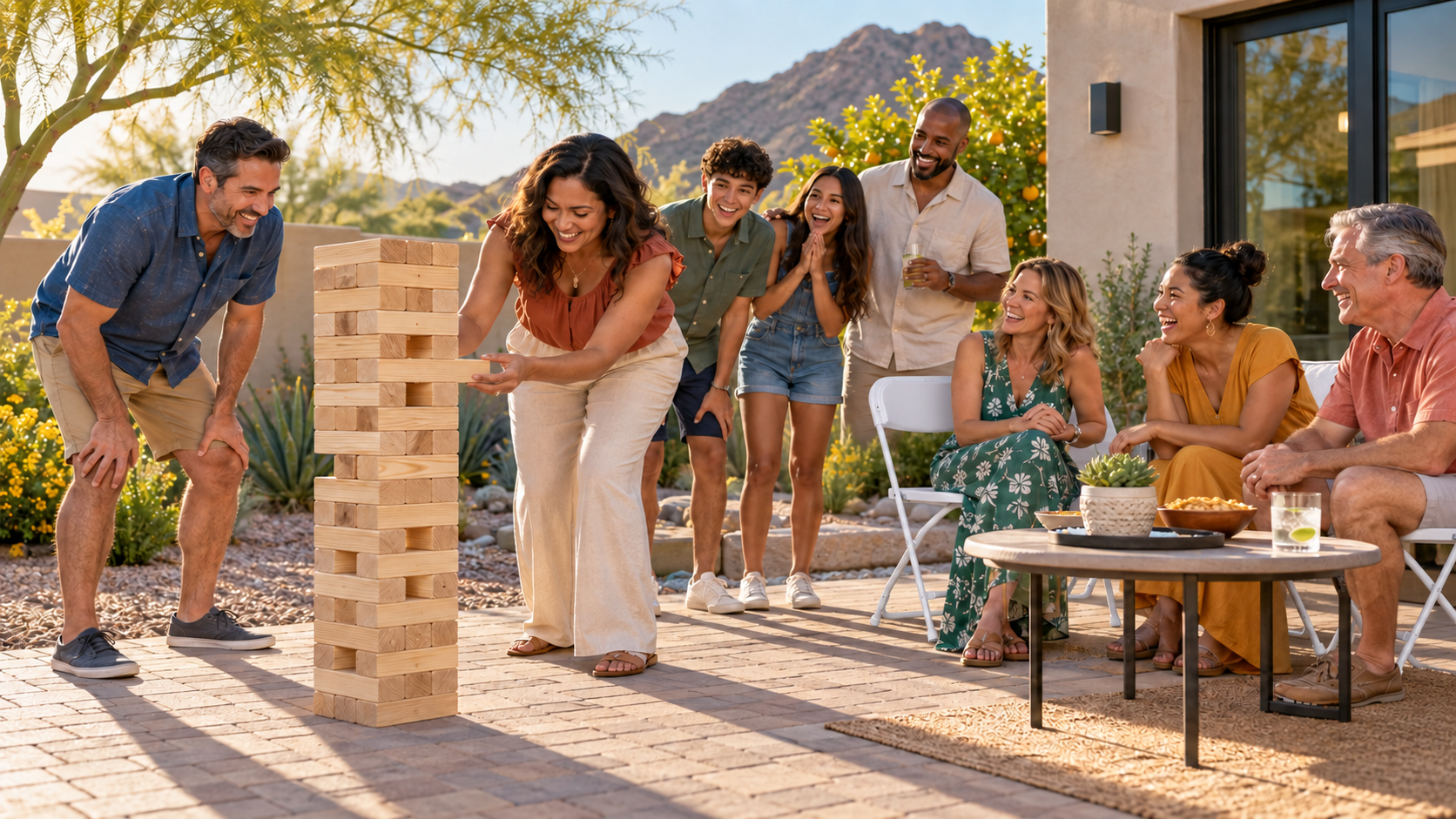
The yard is ready, the snacks are out, and then everyone waits for someone else to start. One confident player takes over the rules. Two guests drift toward the chairs. The host spends the next hour recruiting people into a tournament they never asked to enter.
The practical answer is to plan for an easy first yes, one shared round, and a comfortable place to pause. Choose games by the job they do, not by how impressive they look. Arrange the yard so guests can join, watch, or step away without leaving the party. Then make the first activity playable before the full group arrives.
Quick answer: Build the night around three roles: a quick opener, a flexible anchor game, and an optional shared challenge. Put seating close enough for spectators to feel included, keep food outside active lanes, and explain how the next player joins. The goal is not nonstop competition. It is giving every guest an obvious, low-pressure next move.
Plan the First Yes, Not the Longest Game
The first game has one job: make joining feel easier than standing around.
That usually means guests can understand the basic action in a few seconds, begin with two or three people, and stop after one short turn without disappointing a team. The opener does not need to be the most exciting game of the night. It needs to remove the social question, "Are we playing yet?"
EventRent AZ calls this the First Yes Game Night Plan:
- Easy first yes: An arriving guest can join or watch without waiting for a formal start.
- One shared round: The group comes together once for a short, optional team moment.
- A real pause: Guests can sit, talk, snack, or supervise children while remaining part of the same scene.
- A simple re-entry: Anyone who steps away can tell how to enter the next turn.
If you are still deciding how many stations the yard can support, use the EventRent AZ yard-game capacity and space guide. That guide solves the quantity question. This one solves the participation question.
Choose Three Game Roles Instead of a Giant List
A backyard game night rarely needs ten unrelated activities. It needs a small lineup in which each game does a different job.
| Game role | What it should feel like | Good signs | Watch for |
|---|---|---|---|
| Quick opener | Easy to understand and easy to leave after one turn | Short rounds, visible action, no fixed team commitment | One player giving a long rules speech |
| Flexible anchor | The activity people return to between food and conversation | Clear next-player handoff, fun to watch, works in casual rounds | A waiting crowd that blocks the lane |
| Shared challenge | A brief moment that gathers most of the willing group | Team-based, simple scoring, a clear finish | Elimination, embarrassment, or a format that lasts too long |
Choose the actual games only after checking the people and the yard. Consider age mix, mobility, surface, light, noise, throwing distance, and how much explanation the group will enjoy. Confirm the real instructions for every item.
For a mixed-age party, one visual strategy game, one quick-turn target or toss game, and one simple team challenge often create more choice than three games with the same rhythm. That is an editorial planning example, not a promise about a specific item.
If the night includes children and adults, the EventRent AZ guide to making a kids' party enjoyable for adults too has useful ideas for joinable activities, nearby seating, and one shared moment.
Build a Play-Watch-Reset Layout
Games do not become inclusive because the host says, "Everyone can play." The layout has to prove it.
| Zone | Put here | Protect this | Why it works |
|---|---|---|---|
| Play | Game equipment, concise rules, scoring supplies, active players, and next-up space | Keep throwing, falling, or retrieval areas out of food and walking routes | Players know where the action belongs |
| Watch | Small chair groups, a standing ledge or table, water, and a clear view | Do not turn spectators into an obstacle around the game | Watching feels social instead of like waiting |
| Reset | Drinks, simple food, quieter conversation, extra seating, and loose-piece storage | Keep it close enough to reconnect and far enough to lower the energy | Guests can pause and rejoin without disappearing inside |
Avoid placing all chairs in one distant row. Put some seats in twos and threes at the edge of the action, facing both people and play. A guest should be able to talk, hold a drink, and see a funny moment without standing in a retrieval lane.
Keep the path from the gate to drinks, seating, restrooms, and the exit outside the Play zone. For a tighter yard, use the EventRent AZ door-first small-backyard layout guide before adding a station.
If a guest carrying a plate must cross a game, move the game. If a spectator must stand in the game to see it, move the seat.
Make the First 20 Minutes Playable
Do not wait for everyone to arrive before opening the first game.
Set the opener before the doorbell starts. Put any pieces in place, place the rule card where it can be read, and decide who starts the first turn. Music can already be playing at conversation volume. Drinks should be obvious. The host can say, "Grab a drink. This game is open, and we will do one team round after everyone settles."
Give guests three answers without making them ask:
- Where do I put what I brought?
- What can I do right now?
- Do I need to join, or may I watch?
If guests do not know one another well, do not use the game as a substitute for hosting. Make two useful introductions based on a real connection, then let the activity carry part of the conversation. The EventRent AZ guide for parties where guests do not know one another can help with that first social bridge.
Use One Shared Round Without Forcing a Tournament
A shared round gives the night a center. A tournament can take over the night.
Choose one short team challenge after most guests have arrived and before people become settled into separate conversations. Tell guests it is optional. Explain the action once, use teams that do not depend on athletic ability or public performance, and end while the energy is still high.
A simple structure is enough:
- Give a five-minute warning.
- Invite, do not summon.
- Make teams quickly and visibly.
- Play one or two short rounds.
- Celebrate the finish without making the losing team perform a penalty.
- Reopen free play, food, and conversation immediately.
Avoid a bracket unless the guests came specifically for one. Brackets create waiting, and elimination can turn the first loss into the end of someone's participation.
For casual play, make the handoff obvious. A small sign can say, "Winner stays for one round," "Add your name for next," or "Hand the pieces to the next pair." The exact rule matters less than removing the need to ask the host.
Serve Food Without Stopping Play
Game-night food should survive a break between bites. It should not require the host to cook or plate every few minutes.
Choose a simple self-serve window, keep drinks away from the main game, and give used plates an obvious destination. If dinner is part of the promise, create a real pause for it. If the invitation promises snacks, do not surprise hungry guests with a bowl of chips and a three-hour event.
Useful setup choices include:
- one-handed appetizers or sturdy snacks during open play;
- a clearly timed meal break if the menu needs plates and utensils;
- a separate water and drink station so players do not crowd the food;
- a small surface in the Watch zone for cups; and
- napkins, waste, and cleanup supplies where people finish eating.
Keep food, glass, grills, hot serving equipment, and cords outside throwing or movement lanes. Confirm current food-safety guidance with the responsible food provider or qualified reviewer when perishable dishes will sit outside.
If the budget is still moving, add food, rentals, lighting, supplies, and a contingency line to the EventRent AZ party budget calculator. Use current quotes rather than estimates when they become available.
Plan the Arizona Evening Transition
An East Valley backyard can change quickly as the sun drops. The playing surface that looked obvious during setup may be difficult to read after dark, while a pleasant chair group can end up facing glare or sitting outside the useful light.
Check the yard during the actual event hours. Light the full path from the gate to seating, drinks, restrooms, and the exit. Light game pieces and boundaries without pointing glare into players' or neighbors' eyes. Secure cords and use outdoor-rated equipment according to its instructions.
Review the current National Weather Service Phoenix forecast and hazards close to the event. Use the real forecast, surface conditions, wind, and the specific game's instructions to decide whether outdoor play remains appropriate. Have a simple indoor or covered alternative, even if it is just dessert, music, and conversation.
Do not assume a cooler evening removes the need for water or a break area. Some guests will prefer a quieter seat from the start.
Run the 15-Minute Host Rehearsal
Fifteen minutes of rehearsal can prevent two hours of hosting friction.
Walk the yard as four different guests:
- The early arrival: Can I find a drink and begin something without the full group?
- The casual joiner: Can I understand how to enter the next turn?
- The spectator: Can I sit or stand comfortably without blocking play?
- The person taking a break: Can I pause and rejoin without asking for an update?
Then run the physical check:
- Walk from the gate to every zone without crossing a game.
- Test each light after sunset or at the same light level expected during the event.
- Confirm game pieces, instructions, and any scorekeeping supplies.
- Check that furniture is stable and fully outside movement lanes.
- Put drinks, food, waste, and restrooms on a clear route.
- Name one person who can explain each game and one person who can pause it.
- Decide the cue and finish for the shared round.
- Choose the final activity call and goodbye window.
A sample two-hour game night can stay loose:
| Time | Host move | Guest experience |
|---|---|---|
| 0:00 to 0:25 | Welcome arrivals and keep the opener active | Join, watch, snack, or talk immediately |
| 0:25 to 0:55 | Open the anchor game and food as promised | Move between play and conversation |
| 0:55 to 1:10 | Invite the short shared round | Come together once without committing to a tournament |
| 1:10 to 1:45 | Return to flexible play and the Reset zone | Rejoin a favorite game or settle into conversation |
| 1:45 to 2:00 | Call the final round and begin goodbyes | Finish naturally instead of waiting for the party to fade |
If you need to compare current tables, chairs, or giant-game options after the plan is clear, browse the verified EventRent AZ rental inventory. Confirm availability, quantities, dimensions, instructions, delivery, setup, pickup, and surface requirements before treating any item as final.
Backyard Game Night FAQ
How many games do I need for a backyard game night?
Start with three different roles, not a universal number: one quick opener, one flexible anchor, and one short shared challenge. Then confirm player capacity and the usable yard space. A small yard with two well-placed games can work better than a crowded yard with five.
What if some guests do not like games?
Plan a Watch zone and a Reset zone that still feel connected to the action. Comfortable seating, a place for a drink, and easy conversation are part of the event, not consolation prizes. Keep participation optional.
Should I run a tournament?
Only if the guest list and invitation make competition a main reason for gathering. For a casual mixed group, one short shared round plus open play usually creates energy with less waiting and pressure.
How long should a backyard game night last?
About two hours can work well for a casual evening, but the right length depends on the meal, guest mix, ages, travel, and whether games are the entire event. Publish a clear end time, then call the final round before energy disappears.
Give Everyone an Easy Next Move
The best backyard game night is not the one with the most games or the most elaborate bracket. It is the one where a guest can arrive, understand the scene, and choose a comfortable way to belong.
Plan the first yes. Give games different roles. Build Play, Watch, and Reset into the yard. Bring the willing group together once, then let the night breathe. When joining, pausing, and rejoining are all obvious, the host gets to play too.