Bridal Shower Planning
Bridal Shower Seating Arrangements That Help Every Guest Feel Included
Use the least seating structure that helps. Plan open seats, reserved anchors, table assignments, and guest routes around the moments that matter.
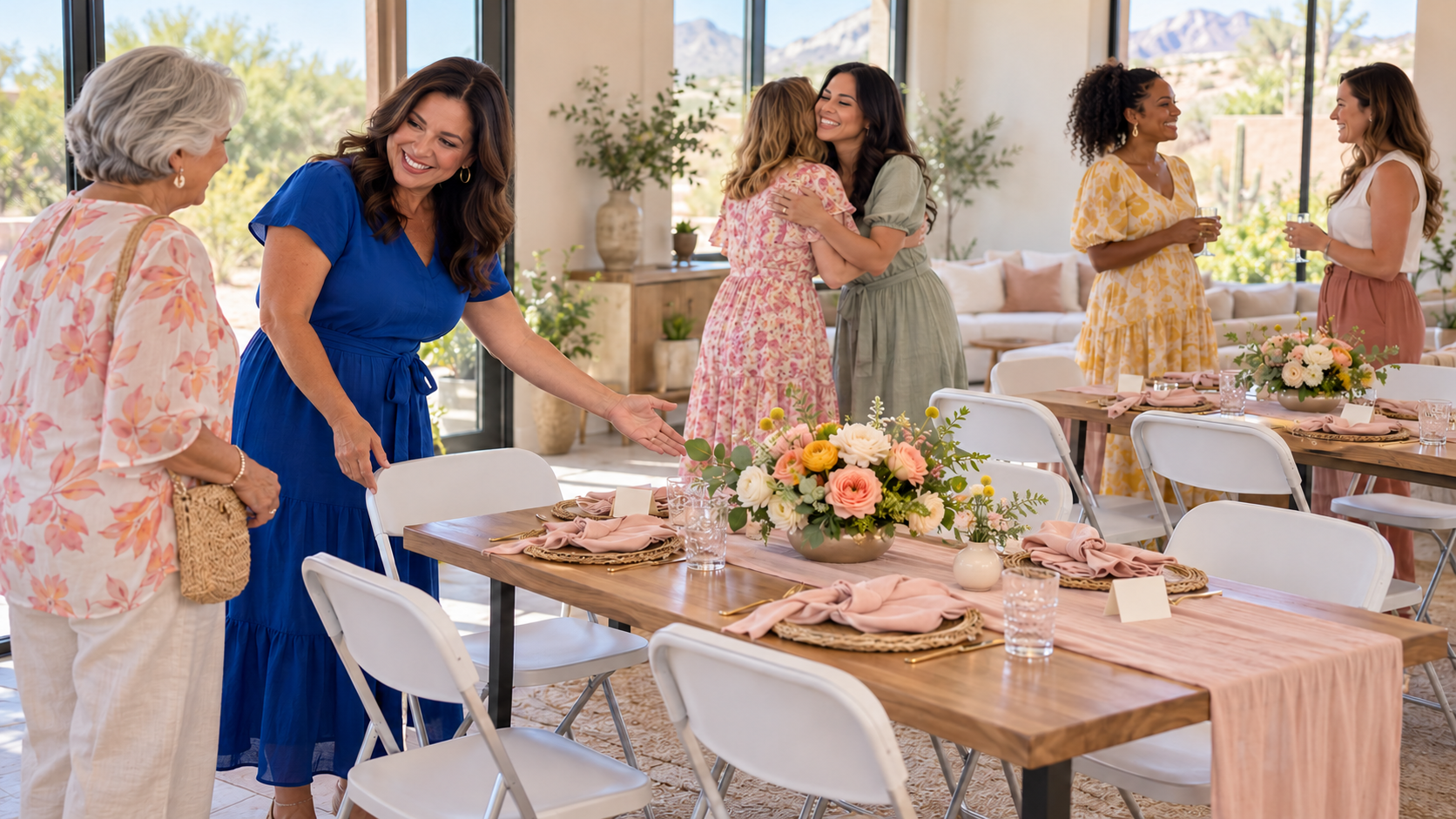
The place cards can be beautiful and still solve the wrong problem. A bridal shower brings together people who may know the guest of honor well but barely know one another. The real goal is not a perfect chart. It is helping every guest enter, sit, talk, see the important moments, and move through the room without feeling like an extra.
Most bridal showers do not need every chair assigned. Start with open seating, reserve the places that genuinely matter, and add table or chair assignments only when the guest mix, meal, room, or access needs call for more structure. Let the guest of honor help choose where they will feel comfortable. Then test the setup for arrival, eating, the shared celebration, and movement.
Quick answer: Use the least structure that solves the real problem. Open seating works when guests can settle easily. Reserved seats help when the honoree, an older relative, a guest with an access need, or a working host benefits from a specific location. Assigned tables or chairs can help when several guest circles do not know one another, a plated meal requires it, family dynamics need care, or the room has multiple tables that could fill unevenly.
In this guide
- Choose open seating, reserved seats, assigned tables, or assigned chairs
- Use the EventRent AZ Seat the Moments Plan
- Reserve the important places before assigning everyone
- Choose the honoree's seat with the honoree
- Mix guest circles without forcing conversation
- Match the table shape to the room and shower format
- Protect the routes to food, gifts, activities, and the exit
- Run the 15-minute occupied-room rehearsal
- Bridal shower seating questions
Choose only as much seating structure as the shower needs
Use this comparison before making a chart:
| Seating approach | Works well when | What the host still needs to do | Watch out for |
|---|---|---|---|
| Open seating | One table or one connected seating area; most guests know someone; food and activities are casual | Reserve any truly important places and greet solo guests into a conversation | Friend groups may claim whole sections before everyone arrives |
| Reserved anchors | A few people need a predictable place, but the rest of the room can remain flexible | Mark or quietly hold those places and tell helpers why they matter | A reserved sign without explanation can look like status rather than care |
| Assigned tables | Several tables are in use; guest circles need a little mixing; the meal or room benefits from balanced groups | Give guests a clear way to find the right table | Overfilled tables and half-empty tables if late changes are not updated |
| Assigned chairs | A long table, plated meal, delicate family arrangement, hearing or visibility need, or another specific reason makes exact placement useful | Set accurate place cards and confirm the final plan with the venue or meal team | More work, more last-minute edits, and less freedom than the event may need |
Guest count alone should not decide. A small shower can need reserved seats because one route is narrow. A larger shower can remain mostly open when the room is simple and guests already know where they belong.
If the plan starts to resemble a wedding reception chart, use the EventRent AZ wedding seating-chart guide for the deeper table-assignment process. A shower usually needs a lighter version.
Use the EventRent AZ Seat the Moments Plan
A chair can be perfect for brunch and terrible for the gift opening. Instead of approving the room from one pretty photo, walk through the four moments guests will actually experience.
| Moment | What the room must make easy | Seating question to ask |
|---|---|---|
| Arrival | Guests enter, place gifts or bags, greet the host, and find a comfortable first move | Can a guest see where to sit without interrupting setup or standing alone at the door? |
| Eating | Everyone has a stable seat and useful surface for the food being served | Does each plate, drink, and guest fit without squeezing the route or borrowing a display table? |
| Shared celebration | Guests can see and hear the toast, activity, story, or gift moment that matters | Does the honoree have a comfortable position, and can guests turn toward the moment without moving half the room? |
| Movement | Guests reach food, drinks, restrooms, conversation areas, and the exit | Can people stand, pass, and return without trapping another guest behind a chair? |
That is the Seat the Moments Plan. A useful arrangement supports all four moments with small adjustments, not a complete furniture reset in the middle of the shower.
Before finalizing the guest count, use the party table-and-chair planning guide to separate guest seating from food, drinks, gifts, and activity surfaces. Those support tables do not replace a real meal place.
Reserve the important places before assigning everyone
Many showers need only a handful of intentional seats. Start with the people whose location affects comfort or the event flow, then decide whether everyone else can choose freely.
Consider reserving a place for:
- the guest of honor, based on their preference and the planned moments;
- a guest who has asked for a shorter route, more space, a quieter area, or another specific accommodation;
- an older relative who would benefit from a stable chair and easy restroom or exit route;
- the host or helper who needs to cue food, activities, gifts, or photos;
- a solo guest who would otherwise arrive to several closed friend-group tables.
Ask people what would help instead of guessing from age, appearance, or relationship. Keep private information out of public place cards and shared planning documents.
Choose the honoree's seat with the honoree
There is no universal chair where a bride or other guest of honor must sit. The best place is the one that helps them participate without turning them into a display.
Ask the honoree:
- Who would they like beside them during the meal?
- Would they rather face the room, sit inside the conversation, or move between groups?
- Will there be a toast, activity, gift opening, or photo moment that changes the best sightline?
- Do they need easy access to a restroom, quieter corner, food, water, or a support person?
- Are there family relationships the host should handle thoughtfully?
If gifts will be opened, avoid a chair squeezed against a wall or directly beside the gift pile. Give the honoree room to sit comfortably, receive an item, pass wrapping away, and speak with the person who gave it. If gifts will not be opened publicly, the seating should not pretend that they will.
Mix guest circles without treating people like puzzle pieces
A bridal shower may bring together childhood friends, coworkers, relatives, future in-laws, neighbors, and wedding-party members. The host does not need to engineer instant friendships. The goal is simply to give each guest an easy first conversation.
Make a private guest-circle worksheet with three columns:
- Comfort person: Who does this guest already know or feel at ease with?
- Conversation bridge: Who shares a useful connection, interest, neighborhood, life stage, or relationship to the honoree?
- Avoid or ask: Is there a placement the honoree has asked the host to avoid, or a private need that requires confirmation?
Keep at least one comfort connection for a guest who would dislike being placed among strangers. Then add a bridge person where it feels natural. Do not split every couple, separate every friend pair, or use seating to force emotional conversations.
The room can help too. A simple activity that works without a long explanation gives guests something to share before the meal. The bridal shower activities that are not games guide offers drop-in ideas that can support conversation without making every guest perform.
Match the table shape to the room and shower format
Round tables can make conversation feel balanced because guests face one another. Rectangular tables can fit narrow rooms, support one connected meal, or create a clear central line for serving and decor. Neither shape is automatically more elegant or more social.
Choose by what must happen:
- One long table can feel warm for a smaller seated meal, but guests at opposite ends may feel far apart.
- Several round tables can support smaller conversations, but the host needs a reason for how the groups are divided.
- Several rectangular tables can fit a clubhouse or patio efficiently, but tight rows can create difficult chair and service paths.
- Mixed shapes can work when each table has a clear job, but random leftovers can make some guests feel like overflow.
The round-versus-rectangular party table guide compares the shapes by seating, serving, conversation, and movement. Use the real room dimensions and the actual table and chair footprints before deciding.
Protect the routes to food, gifts, activities, and the exit
The seating arrangement should not make every other part of the shower harder.
Walk the route from the entrance to:
- the first open or assigned seat;
- the drink and food area;
- the restroom;
- the gift landing place;
- the planned activity or shared moment;
- the outdoor area, if one is part of the event; and
- the exit.
Do the walk with chairs pulled out, not tucked neatly under empty tables. A route that works only before guests sit down does not work.
Keep the gift table out of the main entrance pinch point. Put drinks where a refill line will not form behind seated guests. Leave the host a path to cue the next moment without squeezing between chairs. If the shower uses a restaurant or venue, confirm what furniture may move, who moves it, and when the final count is due.
Write the seating expectation into the host plan, not necessarily the invitation. The invitation should still tell guests the details they need to arrive comfortably. Use the EventRent AZ bridal shower invitation wording guide to make the date, time, location, host, RSVP, and relevant format clear.
If the guest count or furniture plan changes the spending ceiling, test the real number in the free EventRent AZ party budget calculator before buying decor for a layout that may change.
Run the 15-minute occupied-room rehearsal
Fifteen minutes before decorating is finished, ask two helpers to sit in the room while the host walks it. Pull out the chairs, place a sample plate and cup, and carry an empty gift bag through the main route.
Use this rehearsal card:
- Arrival: The first guest can enter, place a gift, and find a seat without asking three questions.
- Honoree: The guest of honor can sit, stand, and join the shared moment comfortably.
- Conversation: No guest is isolated at an overflow table or pointed at a wall.
- Meal: Every seated guest has the surface the menu requires.
- View: Guests can turn toward the planned toast, activity, or gift moment.
- Paths: Chairs in use do not block food, restroom, entrance, or exit routes.
- Helpers: The host and helpers can reach their jobs without crossing the center of every conversation.
- Late change: One cancellation or addition does not collapse the whole plan.
Remove a decorative object before removing a useful path. Shift a table before asking a guest to squeeze. Change an assignment before printing a beautiful chart that protects the wrong plan.
Bridal shower seating questions
Does a bridal shower need a seating chart?
Not always. Open seating can work for a small or connected group in a simple room. Reserve a few important places or assign tables when the guest mix, meal, room, access needs, or family dynamics would otherwise make settling awkward. Use exact chair assignments only when they solve a specific problem.
Where should the bride sit at a bridal shower?
Ask the bride or guest of honor. Choose a place that supports the meal, conversation, planned activities, comfort, and easy movement. A middle seat, end seat, or central table can each be right in a different room. Preference and participation matter more than a universal tradition.
Should mothers and the wedding party sit with the bride?
They can, but they do not have to. Let the honoree and host choose the people who will make the meal and shared moments feel comfortable. Other relatives and friends should still have an easy conversation connection and a seat that respects any confirmed needs.
Are assigned tables enough, or should every chair be assigned?
Assigned tables are often enough when the host wants balanced groups but guests can choose their neighbor. Exact seats add value for long tables, plated meals, visibility, hearing, access, host roles, or delicate relationships. Use the least control that solves the real issue.
Let the room support the relationships
A bridal shower seating arrangement should help people feel expected, not managed. Start open. Reserve the places that protect comfort and participation. Assign tables or chairs only when the room or guest mix gives you a reason.
Then run the Seat the Moments Plan. If guests can arrive, eat, celebrate, and move without confusion, the seating has done its job. The flowers can be beautiful after that.