Birthday Planning
How to Plan a First Birthday Party That Your Baby Can Actually Enjoy
Use the Baby-First Party Plan to choose the time, room, shared moment, and one helper who makes the day easier.
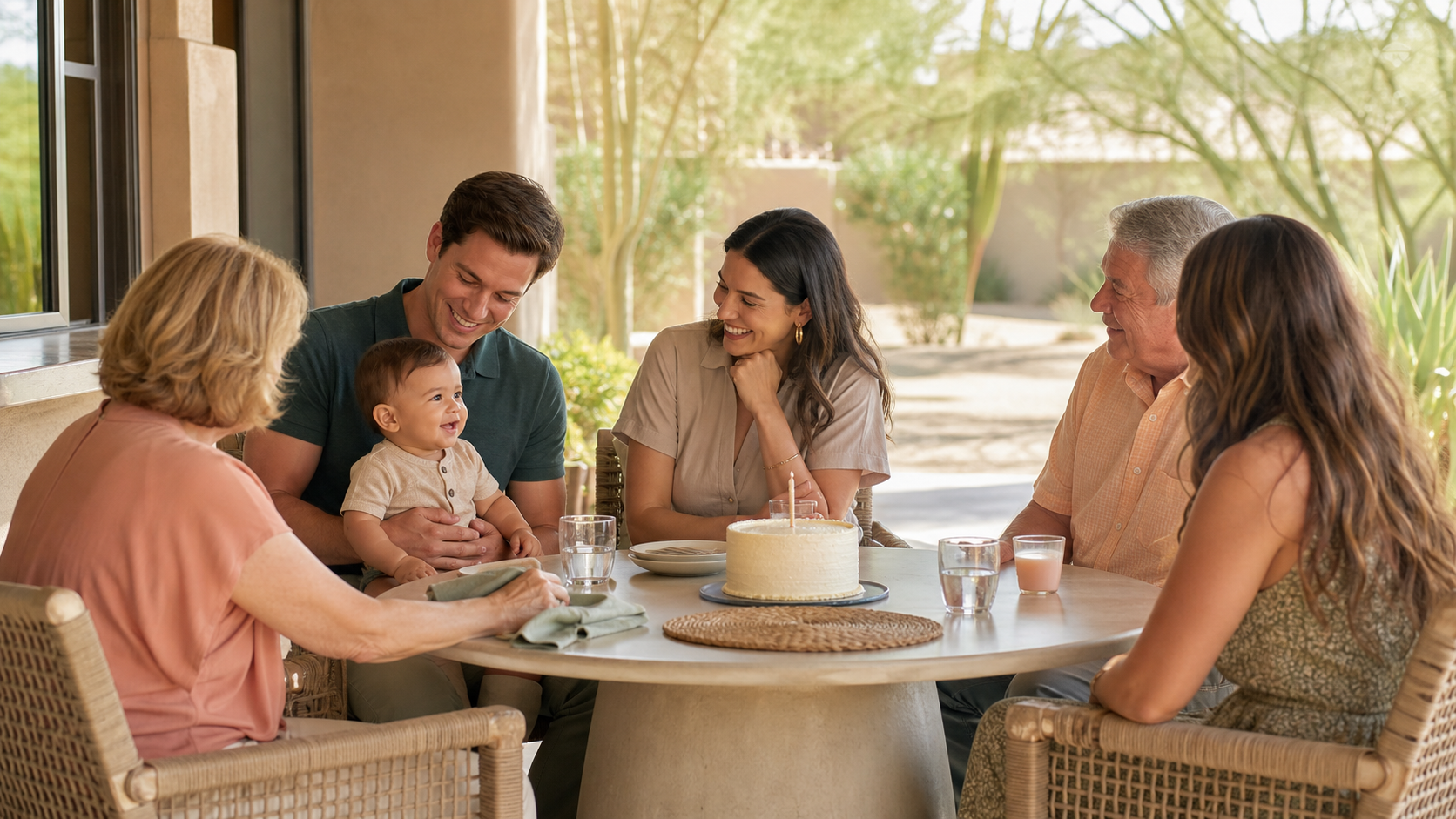
A first birthday can quietly turn into a party for the checklist. The banner has to match the cake, the cake has to survive the drive, and someone is still arranging favors while the birthday baby decides the whole room is too much.
The practical answer is simpler: plan around your baby’s best social window, keep the celebration short, create one calm place to reset, and protect one moment you want the family to share. Everything else is optional. A first birthday does not need constant activities or elaborate decor to feel important. It needs a comfortable baby, people who matter, and a host who gets to be in the memory.
Quick answer
Start with a 90-minute to two-hour window that works with your baby’s current rhythm. Invite the people you genuinely want close, give adults somewhere comfortable to settle, choose one shared moment such as cake or a family photo, and ask one trusted person to handle photos or practical questions.
In this guide
- Why a first birthday is a milestone, not a performance
- The Baby-First Party Plan
- How to choose the time, length, and guest list
- How to set up the room
- How to plan one shared moment
- How to simplify food, photos, decor, and hosting
- A simple way to know the party worked
A First Birthday Is a Milestone, Not a Performance
Your one-year-old may love the attention, need ten minutes to warm up, or decide that the wrapping paper is more interesting than every activity you planned. That is not a failed party. It is a one-year-old being one.
The party can celebrate two things at once: your child’s first year and the people who helped your family through it. That makes the guest experience important, but it does not make the baby responsible for entertaining everyone.
Before you choose a theme, write one sentence about what you want the gathering to feel like. Try something as simple as, “We want an easy family afternoon where everyone gets time with the baby and we take one good group photo.” That sentence is a better filter than a cart full of decor.
If an idea makes that feeling easier, keep it. If it adds setup, expense, or pressure without changing the memory, let it go.
Use the EventRent AZ Baby-First Party Plan
The Baby-First Party Plan puts four decisions ahead of themes, favors, and activity lists: Rhythm, Room, One Moment, and One Handoff.
| Decision | Ask this | Practical choice |
|---|---|---|
| Rhythm | When is the baby usually rested, fed, and open to people? | Put the party inside that window and keep the invitation time clear. |
| Room | Where can the baby join, move, eat, and take a quiet break? | Create a social area plus one low-stimulation landing spot. |
| One Moment | What do we most want to share or remember? | Choose cake, a song, a short toast, a family photo, or one simple tradition. |
| One Handoff | What job would keep the parent from being present? | Give one trusted person the camera, door, food refresh, or question-answering job. |
This plan does not require a perfect schedule. Babies change quickly, and the nap pattern on invitation day may not match the birthday week. Build around the current rhythm, then leave enough flexibility to move the shared moment earlier if the baby is fading.
Do not make the baby wait for the party to catch up. If your child is happy and the key people are present, it is fine to sing, take the photo, or serve the cake sooner than planned.
Choose the Time, Length, and Guest List Before the Theme
Start with the part of the day when your baby is usually most comfortable with people. For many families, that means after a familiar nap or meal, but your child’s real pattern matters more than a generic schedule.
A short invitation window also helps guests understand the shape of the day. The EventRent AZ guide to choosing a birthday party length uses 60 to 90 minutes as a starting point for babies and young toddlers. For a first birthday with a larger family guest list, 90 minutes to two hours often gives people time to arrive, visit, eat, share one moment, and say goodbye without stretching the baby’s energy too far. Treat that as an editorial starting point, not a rule.
Build the guest list from closeness, not obligation. Ask:
- Who does the baby already know or see comfortably?
- Who helped your family through the first year?
- Who will make the room feel warmer rather than busier?
- How many people can the space hold without crowding the baby’s movement or the adults’ conversation?
A small first birthday is not a lesser first birthday. Six people around a kitchen table can create a stronger memory than a room full of guests the parent never gets to greet.
If you invite a larger mixed-age group, plan for the adults too. Comfortable seating, clear food and drink locations, and one joinable activity can help everyone connect without creating a second party. The guide to making a kids’ birthday enjoyable for adults can help with that part of the setup.
Set Up the Room for Calm, Connection, and Easy Movement
Think in three simple areas, even if they are only different corners of one room.
The together area
This is where guests can sit, talk, and see the main moment without blocking a doorway. Keep enough open floor space for adults to move around a child, a high chair, and one another.
The baby area
Give the baby a familiar blanket, a few known toys, or another safe place to play near the adults. A first birthday does not need a complicated activity station for the guest of honor. Familiar objects can be more inviting than a room full of new stimulation.
The landing spot
Choose one quieter room, shaded corner, or comfortable chair where the baby and parent can step away. Stock it with the things that usually help: diapers, wipes, water for the adult, a change of clothes, and any normal feeding supplies.
The landing spot is not where the party failed. It is what lets the party continue without making the baby push through. Tell one close family member where it is so the parent does not have to explain while carrying an upset child.
For an East Valley backyard or patio celebration, keep the baby area and adult seating indoors or deeply shaded when conditions are uncomfortable. Do not rely on one small shade patch that moves during the party. Confirm the real conditions and the property’s rules close to the date, then move indoors when that is the better choice.
Keep food, hot drinks, gifts, cords, small decor pieces, and guest bags out of the baby’s movement path. Check the room from floor level before guests arrive. The most useful setup details are often the ones adults stop noticing because they are above the baby’s view.
Plan One Shared Moment, Then Let the Party Breathe
The best first-birthday schedule is not packed. It has a soft beginning, one clear center, and an ending guests can read.
| Part of the party | What happens | What the host protects |
|---|---|---|
| Arrive and settle | Guests greet one another, find drinks, and let the baby warm up. | No major moment is scheduled while people are still walking in. |
| Easy connection | Family visits, children use open play, and photos happen naturally. | The baby can stay with a familiar adult instead of being passed around. |
| One shared moment | Cake, a song, a brief family toast, or a group photo. | One helper gathers people and another handles the camera. |
| Eat and visit | Guests share food or a simple snack. | The baby eats only foods prepared for their development and routine. |
| Gentle close | Guests take final photos, collect belongings, and say goodbye. | No new organized activity begins near the end. |
Choose a shared moment that fits your family. It might be singing over a small cake, reading one favorite board book, taking a photo with grandparents, or placing one note in a keepsake box for the child to read later.
Keep it short enough that the baby does not have to perform. If the child does not want to touch the cake, smile for the camera, or sit with a particular relative, let the moment change. The memory is the family gathering around the child, not the child completing a scene.
Activities can stay simple. Older children may enjoy bubbles, sidewalk chalk, blocks, or an open game area when the setting and supervision support them. Adults often need only a comfortable place to talk and a natural prompt, such as looking through a small set of photos from the baby’s first year.
Make Food, Photos, Decor, and Hosting Easier on Yourself
Serve food that fits the time of day and the effort you want to carry. A full meal is optional. A morning gathering can use a simple brunch spread. An afternoon party can use snacks and cake. If you promise lunch or dinner on the invitation, make the meal substantial enough to match that expectation.
Keep the baby’s food separate from the general buffet and follow the child’s normal feeding plan. The CDC recommends preparing food in a shape, size, and texture appropriate for the child’s development, keeping the child seated while eating, and supervising the meal. Review the current CDC guidance on choking hazards for infants and toddlers with the baby’s parent or caregiver before finalizing food. Ask a pediatric clinician about any child-specific concern.
Decor needs one visual idea, not coverage on every surface. Choose a color pair, one banner placed out of reach, or a small photo display. Keep balloons, ribbons, batteries, breakable pieces, and small objects away from babies and young children. Any decor, toy, or activity shown in the final setup should follow its product guidance and receive adult supervision appropriate to the children present.
For photos, write a three-shot list:
- the baby with the parent or parents
- the baby with the closest family group
- one wide photo that shows the people who came
Then give the list to one person. That is enough structure to protect the memory without turning the event into a photo session.
Use the same approach for hosting. Assign one person to greet late arrivals or answer “Where does this go?” Ask another to watch the food table. If gifts will be opened, decide before the party whether that happens with everyone, privately later, or not at all. Put the choice on the invitation only if guests need to know.
Set a spending ceiling before small purchases multiply. The free EventRent AZ party budget calculator can help you group the real costs and decide what deserves the budget. Start with guest comfort and the shared moment. Theme extras come after those are covered.
The ten-minute Baby-View Check
Walk the setup once before guests arrive:
- Sit or crouch near the baby’s level. Remove reachable small objects, cords, unstable decor, hot items, and guest belongings.
- Follow the path from entrance to seating, food, restroom, and landing spot. Clear any squeeze point.
- Put diapers, wipes, a change of clothes, and normal feeding supplies where the caregiver can reach them quickly.
- Confirm the camera helper and the timing of the one shared moment.
- Place water and a seat where the parent can actually use them.
- Remove one activity or decor task that still needs attention. The host’s presence is more valuable than one last detail.
The First Birthday Only Needs to Feel Like Your Family
A meaningful first birthday does not have to look bigger than the baby’s life. Choose the best social window you can, welcome the people who matter, protect one shared moment, and give everyone room to enjoy it.
If your baby feels safe, your guests feel included, and you are present for the memory, the party did its job.