Community Event Planning
How to Plan a Trunk-or-Treat That Feels Fun, Not Chaotic
Use the Park, Walk, Play Plan to separate parked vehicles, the family route, and optional activities before guests arrive.
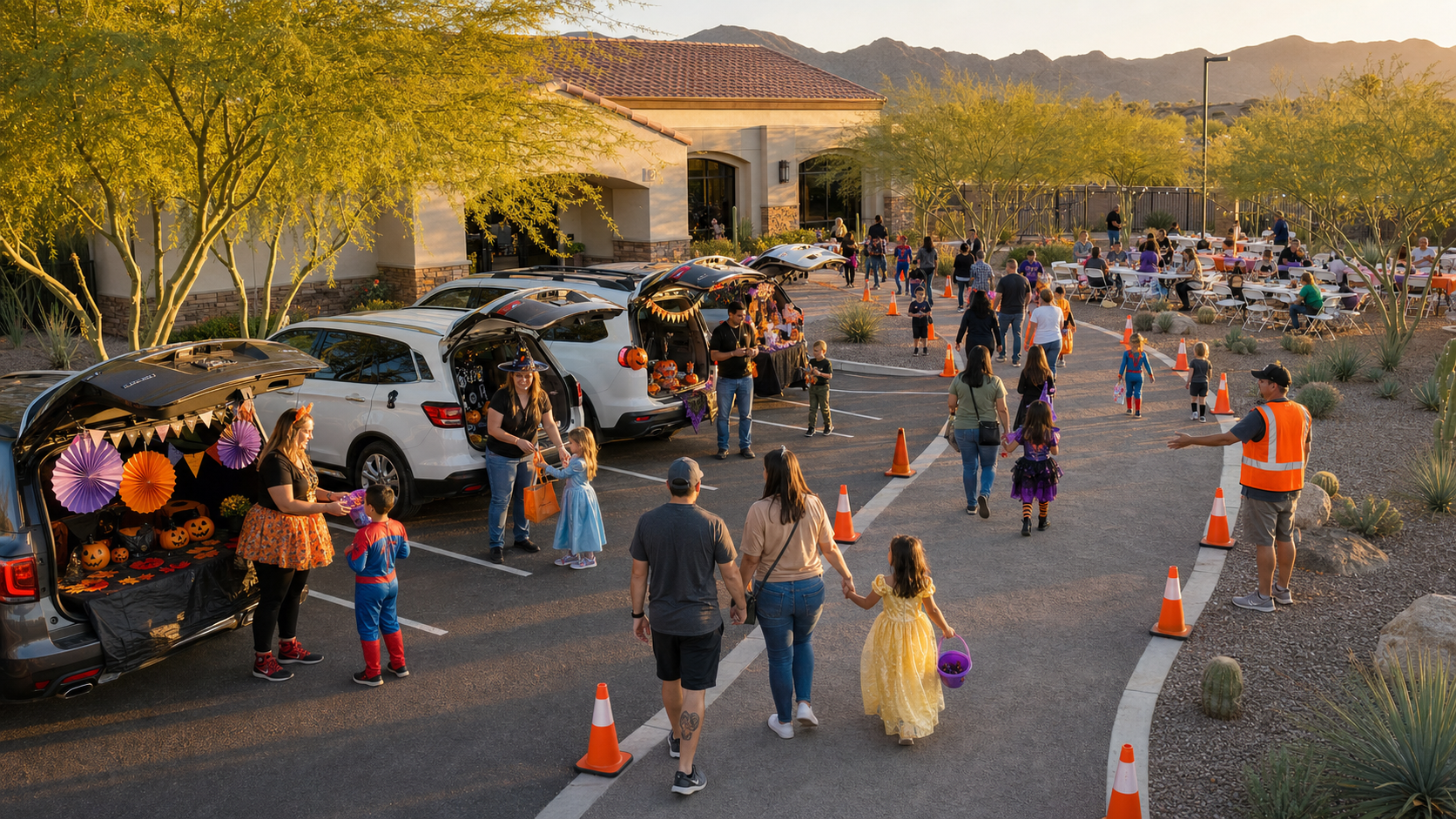
The candy is not what makes a trunk-or-treat feel hectic. The hard part is the ten minutes when decorated cars are arriving, families are walking in, volunteers are pointing in different directions, and nobody is quite sure which lane is still open.
The fix is simple: plan the path before you plan the extras. Park every display vehicle before families enter, give guests one obvious walking route, and place optional games or seating beyond that route. This Park, Walk, Play Plan turns a parking lot full of good ideas into one event families can understand as soon as they arrive.
Quick answer
Build three separate zones. Park is the closed row of decorated, stationary vehicles. Walk is the cone-marked family route with one entrance and one exit. Play is an optional social area after the treat loop. Close vehicle access before guests arrive, send the route in advance, and walk it once from a child's eye level.
Start with the Park, Walk, Play Plan
It is tempting to begin with trunk themes, costume contests, candy, music, and photo backdrops. Those details are fun, but they cannot rescue a confusing layout.
Start with the three movements every guest must understand: where cars stop, where families walk, and where people may linger. If those movements overlap, the organizer spends the event giving directions. If they are obvious, families can arrive for ten minutes or stay and visit without needing a personal escort.
The Park, Walk, Play Plan works like this:
- Park: Trunk hosts enter during a scheduled setup window, take assigned spaces, unload, open their displays, and remain parked until the family portion is over.
- Walk: Families use a separate entrance and follow one visible pedestrian route past the decorated trunks. The path never doubles as a vehicle entrance, overflow parking lane, or waiting area.
- Play: After the treat loop, guests may leave or move into a small social area with seating, water, a photo moment, or one simple activity.
This is not about making the event rigid. It is about removing the few decisions that create friction so the rest can feel relaxed.
Turn one parking lot into three clear zones
You do not need an elaborate site plan to begin. Print an aerial view of the property or draw the lot as a rectangle. Mark the building, gates, curbs, accessible routes, fire lanes, driveways, and any area the property owner says must stay open. Then assign each piece of the event to one zone.
| Zone | What belongs there | What must stay out |
|---|---|---|
| Park | Assigned decorated vehicles, trunk hosts, backup treat bins, approved low-voltage decor | Family parking, through traffic, unplanned late vehicles, generators or cords that cross the route |
| Walk | One family entrance, a wide marked path, route volunteers, clear exit, space for caregivers and mobility devices | Tables, games, photo lines, food service, vehicle movement, decorations that narrow the path |
| Play | Optional seating, water, one easy activity, a photo area, conversation space | Anything that forces every family to stop, blocks the exit, or sends children back across traffic |
Make the Walk zone the easiest line to see in the entire event. Cones can help define it, but the real test is whether a first-time guest can find the start and finish without asking.
Place the Play zone after the treat route, not in the middle of it. A parent with a tired child can head straight to the exit. A family that wants to stay can sit down or join an activity. Nobody has to push through a game line to reach the next trunk.
If the gathering includes rented tables, chairs, or activities, add them only after the pedestrian route is protected. Use the free EventRent AZ party budget calculator to compare priorities without letting small extras quietly take over the plan.
Close vehicle movement before families enter
The most important event-day deadline is not the costume contest. It is the moment the display area becomes a closed pedestrian space.
Give trunk hosts a firm arrival window and a separate setup deadline. When that deadline passes, place a volunteer at the vehicle entrance, close it according to the property's approved procedure, and direct late participants to ordinary parking. A late decorated car can remain a spectator car. It should not back through arriving families just to complete the display row.
This recommendation follows a simple risk pattern. The National Highway Traffic Safety Administration's Halloween guidance tells drivers to expect children in unexpected places, while its pedestrian guidance warns about vehicles backing in parking lots. Your property owner and qualified safety reviewer should confirm the final traffic plan, but “park first, people second” is a clear starting rule.
Send the same closing time to every trunk host. Repeat it in the signup confirmation and the final reminder. On site, use one person to release vehicles only after the family area has closed and the approved route is clear.
Give every trunk host the same short job
Creative trunks make the event memorable. Clear host instructions make those trunks easy to manage.
Keep the signup form focused on what the organizer genuinely needs:
- host name and contact information;
- vehicle type and approximate size;
- arrival and setup window;
- assigned space or check-in procedure;
- family-friendly theme expectations and property rules;
- whether electricity is available or prohibited;
- what the host supplies and what the organizer supplies;
- treat and non-food option guidance;
- the no-movement window; and
- cleanup and release instructions.
Do not make every trunk a mini carnival. A welcoming display, a friendly host, and one simple interaction are enough. If every station adds a long game, the treat route becomes a series of lines and younger children may never reach the end.
Avoid promising a universal number of trunks or pieces of candy. Attendance, event length, participation, and the property's usable space all change the answer. Instead, recruit the number of hosts your approved route can hold comfortably, keep a shared backup supply if the organizer chooses, and confirm the plan with the people responsible for the site.
Make the family invitation answer arrival questions
A trunk-or-treat invitation should do more than announce a date. It should remove the small uncertainties that make parents hesitate: where to park, where to enter, whether costumes are required, how long the route takes, and whether children have an alternative to food treats.
Use the timing principles in the EventRent AZ party invitation guide, then give families one short block they can save:
Family information Park in: [guest parking location] Enter at: [family entrance] Trunk-or-treat hours: [start and end] Costumes: [welcome, optional, or theme guidance] Non-food options: [what is available and how to identify them] Accessibility or accommodation contact: [name and method] Weather or cancellation update: [channel and deadline]
If your event offers non-food treats, keep them in a separate container and explain how families can spot participating trunks. The FARE Teal Pumpkin Project provides current guidance and printable resources for making non-food choices visible. The event organizer should still confirm allergy, food, and treat policies with the property and appropriate human reviewer.
The invitation is also the place to explain whether the event is resident-only, requires registration, permits guests, includes pets, or uses photography. Do not let families discover those rules at the cone line.
Add only the extras that help people stay
Once the route works, choose a few extras that make the event warmer without turning it into a second event.
Useful options may include:
- a small seating area for grandparents, caregivers, and families who want to visit;
- water placed beyond the treat loop;
- one quick, age-flexible activity with a line that does not cross the exit;
- a simple photo backdrop without required posing or public posting;
- a clearly marked non-food option; or
- a quiet edge where a family can pause without leaving the event entirely.
The EventRent AZ neighborhood block-party guide offers a useful companion principle: give people an easy way in. At a trunk-or-treat, that means a newcomer can understand the route, join at the beginning, and leave without squeezing past a crowd.
Choose extras by the problem they solve, not by how impressive they sound. Seating helps someone rest. Water helps families pause. One simple activity gives early finishers a reason to stay. A random pile of attractions can scatter volunteers and hide the route.
Run the event by transitions, not constant announcements
A simple 90-minute family window is often easier to understand than an evening packed with scheduled moments. Treat this as an editorial example, not a rule:
- Before opening: Trunk hosts arrive, park, decorate, and receive a short briefing.
- Opening: A volunteer welcomes families and points out the entrance, route, exit, and optional Play zone.
- Middle: Route volunteers watch for bottlenecks, help families find alternatives, and keep the walking path open.
- Closing: The entrance closes first. Families already on the route finish. The organizer confirms the pedestrian area is clear before any approved vehicle release begins.
Fifteen minutes before opening, walk the full route with one person pretending to be a first-time parent and another looking from a child's height. Ask:
- Can we find guest parking without entering the trunk row?
- Is the family entrance obvious?
- Does any cone, cord, table, decoration, or line narrow the walking path?
- Can a family skip the Play zone and reach the exit?
- Can someone with a stroller or mobility device use the approved route?
- Is the vehicle entrance actually closed and monitored?
- Does every volunteer know who decides when the area may reopen?
A calm trunk-or-treat is not the one with the most decorations. It is the one where families stop thinking about logistics and start noticing each other. Park the cars, protect the walk, keep play optional, and let the fun feel easy.