Party Planning
How Early Should You Set Up for a Party?
Stop letting setup run into arrival time. Use the Guest-Ready Clock to decide what to finish the day before, three hours out, 90 minutes out, and in the final 30 minutes.
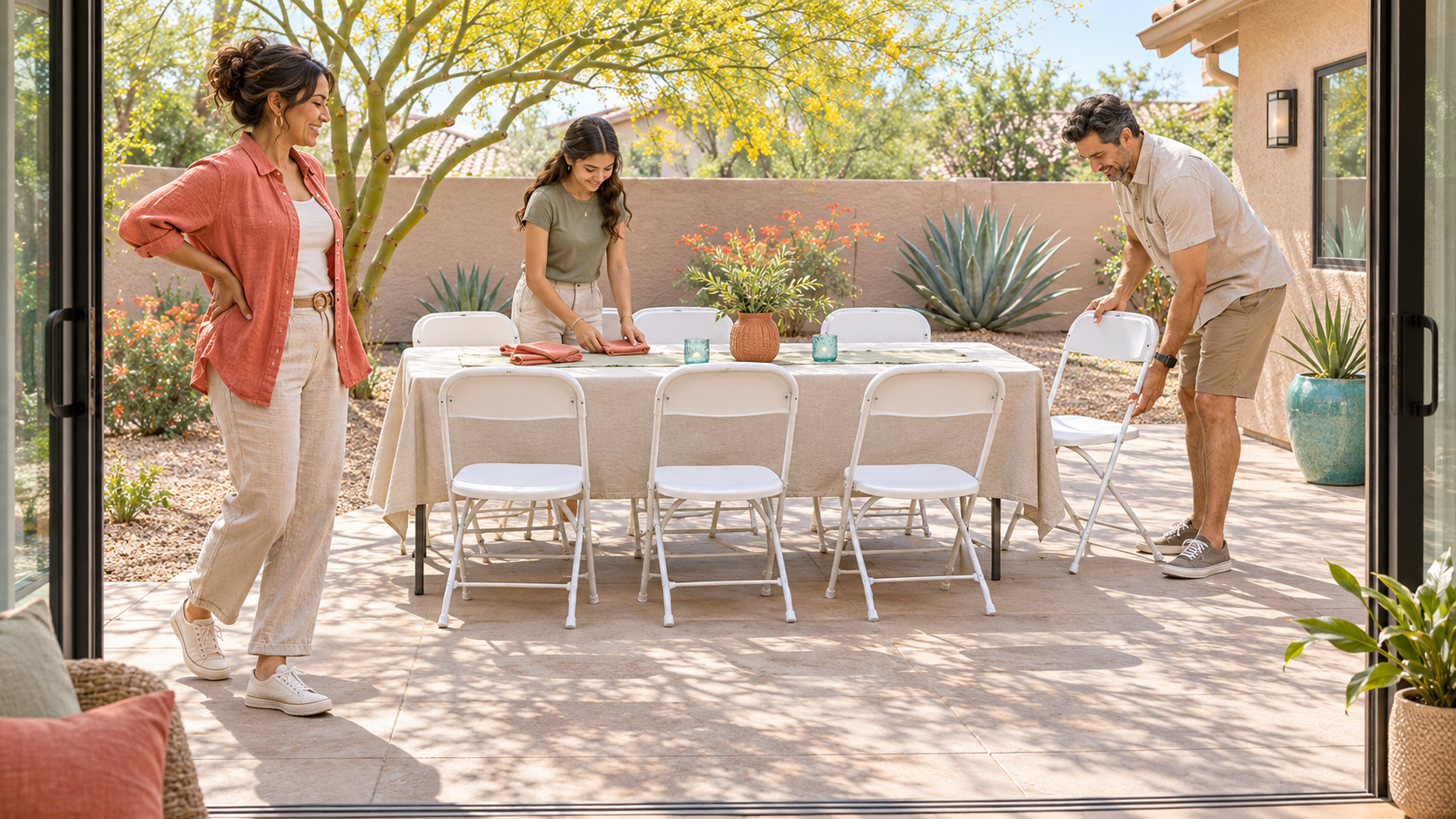
The doorbell should not be the sound that reminds you to change your shirt. Yet party setup has a way of expanding until the first guest arrives, especially when every napkin, chair, snack, and decoration feels equally urgent.
For most parties at home, finish the furniture, main layout, and durable decorations two to three hours before guests arrive. Finish the guest-facing details about 90 minutes before, then protect the final 30 minutes for yourself, a safety-and-flow check, and only the food or ice that truly needs to wait.
Quick answer: Start big, messy, and movable setup about three hours before the party. Aim to have the room guest-ready 30 minutes before the stated start time. Do not put perishable food, ice, or other fresh items out simply because the tables are ready.
In this guide
- Use the Guest-Ready Clock
- Reset the space the day before
- Place the large pieces three hours before
- Finish guest cues 90 minutes before
- Protect the final 30 minutes
- Adjust the clock by party format
- Use the ten-minute guest walk
Use the Guest-Ready Clock instead of one giant setup list
A party setup list becomes stressful when “move the table” and “put out the cold dip” live on the same line. They are not the same kind of job.
The EventRent AZ Guest-Ready Clock separates work by what can sit finished without creating another problem:
| Time before guests | Guest-Ready Clock stage | Best jobs for this window | What success looks like |
|---|---|---|---|
| The day before | Reset | Clear guest routes, gather serving pieces, clean the bathroom, move nonessential clutter, group decorations, confirm tables and chairs | The house can become a party space without a scavenger hunt |
| About 3 hours | Place | Set tables and chairs, define food and drink stations, move coolers into position, hang durable decor, open the arrival route | The large pieces are settled and nobody is carrying furniture through a finished room |
| About 90 minutes | Finish | Add table settings, signs without private information, room-temperature snacks, music, lighting, trash points, and helper supplies | A guest could walk in and understand where to go and what to do |
| Final 30 minutes | Stop | Get dressed, drink water, place time-sensitive food and ice, check the restroom, lower the music, walk the guest route | The host is available and the party feels intentional, even if one decorative idea never happened |
The goal is not to finish every possible task. The goal is to finish the tasks that let people arrive, settle in, eat or drink, and join the gathering without needing the host to repair the room.
If the larger issue is how to stay present once the party begins, the EventRent AZ stress-free hosting guide continues the plan with clear guest cues, specific helper jobs, and a host stop-doing list.
The day before: reset the space, but keep the house livable
The best day-before work removes friction. It should make tomorrow easier without forcing the family to tiptoe around a finished party for 24 hours.
Do the jobs that are unlikely to unravel overnight:
- clear the entrance, main walk route, and restroom path;
- gather plates, cups, napkins, serving utensils, trash bags, tape, and extension cords in one staging area;
- move private, fragile, or unnecessary items out of guest spaces;
- wash or wipe the serving pieces you plan to use;
- group decor by the room or table where it belongs;
- confirm that borrowed or rented tables and chairs are present, clean, and assigned a location;
- put drinks in the refrigerator and make space for food that will arrive later.
Avoid completing any setup that blocks breakfast, traps a car, closes the only useful doorway, or tempts children and pets to dismantle it. A beautiful table that must be taken apart for lunch is not early progress. It is tomorrow's duplicate work.
Ask one sorting question: Can this task stay finished until guests arrive without becoming dirty, warm, wilted, blocked, or in the way? If yes, it can probably happen early. If no, prepare the supplies and leave the final move for party day.
About three hours before: place the large pieces first
Three hours before a home party is a useful starting point, not a promise that every event needs exactly three hours. A small dessert gathering may need less. A large outdoor meal, detailed shower, or unfamiliar venue may need more.
This is the window for work that changes the room:
- Put tables and chairs in their real positions.
- Open the entrance guests should use and protect that landing space.
- Choose where food, drinks, gifts, coats, and trash will go.
- Move coolers and serving tables into position while they are still empty.
- Add durable decorations that do not interfere with movement.
- Test the route from the entrance to seating, food, drinks, and the restroom.
Place furniture before table settings and decor. Otherwise, every correction becomes a careful shuffle around glassware, flowers, or finished place settings.
For a compact patio or yard, use the door-first small-backyard layout plan before adding more furniture. If you are still deciding how much seating or how many support tables the event needs, the table-and-chair planning guide answers that separate question.
About 90 minutes before: finish what makes the party understandable
Now the large decisions should be over. The Finish stage is for the details that help guests use the setup without asking for directions.
Put cups beside drinks, napkins where food will be eaten, and serving utensils with the dishes they belong to. Make the waste point visible without making it the visual centerpiece. Turn on the playlist and stand in the conversation area. If the music already feels loud in an empty room, it will not become easier to hear after guests arrive.
This is also the right time for a full function test:
- turn on decorative and pathway lighting;
- test speakers, microphones, screens, or games that depend on power;
- check that a pulled-out chair does not close a walkway;
- confirm that doors, gates, and restroom routes still work;
- set out shelf-stable snacks and empty serving pieces;
- give each helper one job with a clear ending.
A useful helper handoff sounds like, “Please fill the water dispenser, set the cups beside it, and tell me when that station is done.” “Help with drinks” leaves the helper waiting for the next instruction.
If the buffet is the part making you nervous, use the one-way buffet setup guide to arrange plates, food, condiments, drinks, and refills around the way a guest actually moves.
Protect the final 30 minutes, because the host is part of the setup
The final half hour is where good plans are often spent on low-value polishing. A host adjusts one centerpiece, notices a dusty shelf nobody will use, then realizes guests are parking outside.
Treat this window as protected time:
- change clothes or make the personal reset you need;
- drink water and eat something small if the schedule has been busy;
- put out ice and the food that genuinely needs a late finish;
- check soap, hand towels, toilet paper, and a visible trash can in the guest bathroom;
- clear packaging, tools, boxes, and setup bags from guest view;
- lower the music to an arrival-friendly level;
- stop adding decor.
Do not place perishable food early just to make the room look complete. USDA guidance says food should not sit at room temperature for more than two hours, or more than one hour when the temperature is above 90°F. Review the USDA buffet food-safety guidance and adapt the plan to the actual food, holding equipment, temperature, and qualified local requirements.
A party can be ready while a chilled dish is still in the refrigerator. Put an empty serving piece or a small note in the staging area so the late item is remembered without sitting out too soon.
Adjust the clock to the kind of party you are hosting
The four stages stay useful, but the priority changes with the format.
| Party format | Finish earliest | Leave until later | Protect most carefully |
|---|---|---|---|
| Casual open house | Entrance, drink station, flexible seating, trash point | Small food replenishments and anything tied to later arrivals | A clear welcome and an obvious place to settle |
| Seated meal | Dining layout, place settings, serving route | Hot, cold, crisp, or dressed foods | Kitchen handoff and room for people to sit at once |
| Children's party | Adult sightlines, activity boundary, bathroom, water | Messy materials, cake, and activities needing supervision | Arrival and pickup communication plus clear walk paths |
| Outdoor gathering | Furniture, shade plan, lighting, cords, backup location | Ice and temperature-sensitive food | Stable surfaces, safe routes, and the actual conditions at party time |
For an East Valley outdoor party, durable setup may happen early while the sun is comfortable, but “durable” is the key word. Keep ice, refrigerated food, and anything affected by the actual conditions on their own clock. Confirm the plan against the property, event, equipment instructions, and current conditions rather than assuming one Arizona rule fits every date.
Use the ten-minute guest walk as your stopping test
Ten minutes before the protected final buffer begins, stop working like the person who built the party and walk through it like someone who has never been there.
Arrive
- Is the intended entrance obvious?
- Can a guest pause to greet the host without blocking the door?
- Is there a place for gifts, bags, coats, or a cooler if the invitation makes those relevant?
Settle
- Can guests see drinks, seating, and the main gathering area?
- Is there a stable seat for anyone who needs one?
- Can chairs be used without closing the main path?
Eat and drink
- Are cups, napkins, plates, and serving tools where they are needed?
- Can a short line form without blocking the entrance or restroom?
- Is the refill plan ready even if the refill food is still safely stored?
Move and leave
- Are cords, boxes, bags, toys, and cleaning supplies out of the route?
- Can someone reach the restroom without squeezing behind occupied chairs?
- Can a guest leave without crossing a game, buffet line, or private room?
If the guest walk works, the setup is done. Take a quick photo if you want one, put the checklist away, and become the person who invited everyone.
Frequently asked questions
Can I set up for a party the night before?
Yes, for tasks that can stay clean, safe, and out of the way. Clear routes, gather supplies, move furniture that will not disrupt the household, and add durable decor. Leave perishable food, ice, and fresh or fragile details for the appropriate later window.
Is three hours enough time to set up a party?
It is a practical starting point for many home gatherings when shopping, cleaning, and supply gathering are already finished. Add time for a larger guest count, unfamiliar venue, detailed decor, complicated food service, outdoor equipment, or anything that needs a careful test. Reduce the plan before relying on rushed setup.
What should be completely ready 30 minutes before guests arrive?
The entrance, guest routes, seating, restroom, drink access, basic food plan, waste point, lighting, and music should make sense. The host should also be personally ready. A time-sensitive dish may still be stored safely as long as someone owns the final step.
What if guests arrive early?
Designate one guest-ready area first, usually the entrance plus the main gathering space. Keep tools and unfinished supplies contained in one non-guest area. If a friend or relative is intentionally coming early to help, agree on that separately so the host does not have to switch from setup mode to hosting unexpectedly.
Finish the useful work, then let the party begin
Starting early only helps when the right tasks happen early. Reset the space the day before, place the large pieces about three hours out, finish the guest cues around 90 minutes out, and protect the last 30 minutes.
The room does not need one more decoration. It needs a host who can open the door and mean, “I’m glad you’re here.”