Seasonal Event Planning
How to Host Friendsgiving Without Spending the Whole Night in the Kitchen
Share the decisions before the meal. This Friendsgiving plan protects oven space, creates clear arrival and cleanup handoffs, and gets the host to the table.
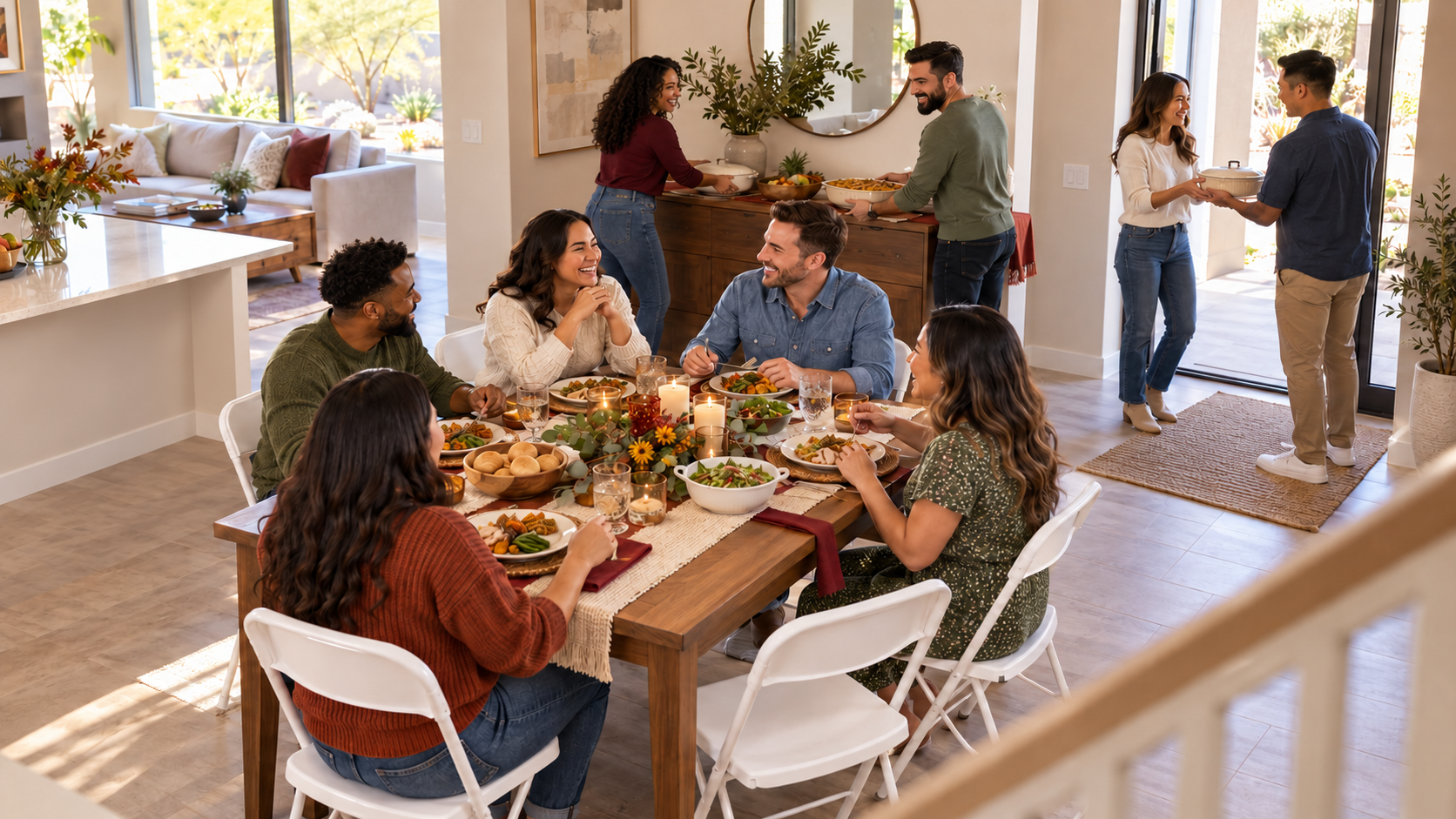
The group chat is cheerful until every reply quietly gives the host another job. One friend needs oven space. Another is bringing "something sweet." Someone asks about chairs. By the time the doorbell rings, the person who invited everyone is running a kitchen, a coat check, and a help desk.
A good Friendsgiving shares the decisions before it shares the meal. Let the host own the room and one anchor dish, ask every contribution to arrive ready with its serving needs, and give two trusted friends the door and leftover handoffs. That is how the host gets out of the kitchen and into the memory.
Quick answer: Use the EventRent AZ Host Joins the Table Plan. Set a Home Base for what the host provides, make a Hot List for anything that needs the oven or refrigerator, and assign two Handoffs for arrivals and closeout. Stop starting new cooking one hour before guests arrive. From that point forward, the host only warms, sets out, gets ready, and joins the table.
In this guide
- Choose what the host owns
- Build one contribution map
- Protect kitchen capacity
- Set the room for the shared meal
- Use the last-hour timeline
- Finish with the occupied-room check
Start by choosing what the host actually owns
Friendsgiving can be a potluck without becoming a free-for-all. Before asking what everyone wants to bring, decide what the host will guarantee.
For most groups, the host's Home Base includes:
- the date, arrival window, and planned meal time;
- the room, seating plan, and serving route;
- one anchor dish or another clearly named centerpiece for the meal;
- water, basic plates, napkins, trash bags, and labels;
- one honest note about oven, refrigerator, outlet, and parking limits.
That is enough structure to make the dinner dependable. It is not a promise to cook every traditional dish, supply every drink, or rescue every forgotten utensil.
Pick the anchor dish by confidence, not symbolism. If the host loves roasting a turkey, great. If a smoked main is coming from the friend who enjoys that job, the host can own a vegetarian centerpiece, a soup, or the table setup instead. Store-bought food is still food. The invitation should describe the plan honestly, without turning anyone's contribution into a cooking audition.
For a broader shared-meal system, use the EventRent AZ potluck planning guide. Friendsgiving adds one important boundary: the host's final hour must stay protected.
Build one contribution map, not a chain of private texts
Private messages feel friendly, but they hide the whole plan from everyone except the host. Use one shared note, form, or group message that shows what is covered and what still needs an owner.
Ask for five details from every contributor:
- Exact contribution: "macaroni and cheese" instead of "a side."
- Ready state: hot, cold, room temperature, or not food.
- Arrival need: oven time, refrigerator space, outlet, ice, or none.
- Serving pieces: pan, lid, trivet, spoon, tongs, or another tool.
- Owner and exit plan: who takes the dish, container, and leftovers home.
Then divide the work by owner instead of assuming the host will absorb every blank.
| Owner | Before the event | During arrival | At closeout |
|---|---|---|---|
| Host | Sets the promise, room, meal time, anchor dish, and limits | Welcomes people and makes only final meal decisions | Thanks guests and keeps only the leftovers the household wants |
| Door helper | Knows the landing zones and invitation details | Receives dishes, adds labels, and redirects coats or supplies | Returns stray lids, utensils, and personal items |
| Closeout helper | Brings or confirms containers, foil, labels, and bags | Stays out of the active kitchen unless asked | Starts leftovers, clears obvious trash, and protects containers from disappearing |
| Each guest | Names the exact contribution and readiness needs | Brings it cooked or prepared as promised, with its serving utensil | Claims the container and completes the agreed helper task |
Equal contribution does not mean equal cooking. A friend who does not cook can bring ice, bread, drinks, take-home containers, music, a store-bought dessert, or thirty minutes of cleanup help. The plan works when the jobs are visible and useful.
Copy-ready Friendsgiving invitation
Friendsgiving is at our place on [date]. Arrive between [time] and [time], and we plan to eat at [meal time]. We are providing [anchor dish], water, and the setup. Please claim one open contribution in [shared list or thread] and note whether it needs oven, refrigerator, ice, or outlet space. Bring the serving utensil and container that go with it. Tell us privately about any access or dietary information that would help you plan safely. We cannot promise a shared buffet is allergen-free, so please ask before assuming a dish works for you.
Protect the oven, refrigerator, and kitchen path
The fastest way to trap the host is to let every dish arrive "almost ready." A casserole that needs twenty minutes, a pie that needs chilling, and a slow cooker looking for an outlet all compete with the same small room.
Create a Hot List before the reminder goes out. Give each oven request a specific window or ask the contributor to choose something that travels ready. Do the same for refrigerator space and outlets. Once the realistic spaces are full, close them.
This is not bossy. It is kinder than discovering at 5:45 that three people built their plan around one oven.
Use four landing zones if the room allows:
- Serve now: ready dishes that can go directly to the buffet.
- Hold hot: equipment and food that can be held safely according to its instructions.
- Hold cold: labeled refrigerator or cooler space.
- Not food: coats, bags, drinks, paper goods, and helper supplies.
Keep the arrival landing place outside the kitchen work triangle and away from the main doorway. A sideboard, counter end, or separate table can work. The one-way buffet setup guide shows how to keep plates, food, drinks, dessert, and dirty dishes from becoming one crowded stop.
Food safety needs an owner, not a vague hope that someone is watching. The FDA recommends keeping hot foods at 140°F or warmer and cold foods at 40°F or colder. It also advises discarding perishables left at room temperature for more than two hours, or one hour when the surrounding temperature is above 90°F. Review the current FDA guidance for serving safe buffets, follow recipes and product instructions, and assign a responsible adult to manage holding and leftovers.
Set the room for the biggest shared moment
Friendsgiving is usually a meal first. If everyone is expected to eat at the same time, plan one stable chair and usable plate surface for every expected guest. A sofa or kitchen island can support conversation, but it is not a comfortable dinner plan for every body or every dish.
Use the table test: sit in the hardest seat, pull the chair out, carry a full-size empty plate to it, and walk from that seat to the buffet, restroom, and exit. Open the refrigerator, oven, and main door while the furniture is in place.
If the room feels tight, remove duplicate decor and move serving food off the dining surface before squeezing chairs closer. Two nearby tables can feel more welcoming than one long table that traps the inside seats.
The Thanksgiving seating guide for small spaces gives three room scenes and several table arrangements that also work for Friendsgiving. If a real furniture gap remains, review the current EventRent AZ table and chair inventory. Confirm dimensions, quantities, availability, delivery or pickup details, and the final layout before treating any item as part of the plan.
For an East Valley home, a covered patio can add breathing room only when it is a complete plan. Check the actual forecast close to the event, use stable level surfaces and safe lighting, follow property rules and equipment instructions, and keep an indoor fallback that can seat the group. Outdoor overflow should not feel like the place the extra people were sent.
Use the Last-Hour Friendsgiving Timeline
The last hour is where the host either joins the evening or disappears into it. Protect that hour by closing the kitchen to new recipes.
| Time | Host's job | Helper handoff |
|---|---|---|
| 60 minutes before arrival | Stop starting new cooking. Clear the sink, counters, and kitchen path. | Closeout helper places foil, labels, containers, trash bags, and towels together. |
| 45 minutes before arrival | Set water, plates, napkins, labels, and one simple ready snack. | Door helper reviews the landing zones and guest messages. |
| 30 minutes before arrival | Get dressed, sit down for five minutes, and stop solving optional details. | A contributor with a confirmed early task handles only that task. |
| 15 minutes before arrival | Turn on lights and music. Check that the restroom and entry path are clear. | Door helper becomes the contact for parking, arrival, and "where does this go?" texts. |
| Meal time | Make one call on what is ready and serve it. Do not wait for decorative perfection. | Door helper shifts into guest mode. Closeout helper quietly watches supplies and leftovers. |
The meal does not need every dish to peak in the same sixty seconds. Warm food can arrive in planned batches. Salad can land after people sit. Dessert can stay out of sight. The goal is a relaxed shared dinner, not a restaurant pass.
If the group is sharing costs, decide that before anyone shops. Name what is communal, what is optional, and how reimbursements will work. The free EventRent AZ party budget calculator can hold the real ceiling and categories without turning a friendly meal into a pile of surprise receipts.
Finish with a five-minute occupied-room check
Run this check with the furniture, serving pieces, and likely guest count represented:
- Can one person enter carrying a heavy dish without blocking the door?
- Can the door helper reach every landing zone without crossing the cooking path?
- Can a guest with the least flexible seating need reach a comfortable place privately and easily?
- Can every dinner guest set down a plate and drink?
- Can someone refill water or clear a dish without stopping the buffet line?
- Can the oven, refrigerator, restroom, and exit open fully?
- Do hot, cold, and room-temperature foods have an owner and a clock?
- Can the host sit down without being the only person who knows what happens next?
If the last answer is no, the plan needs one more handoff, not one more decoration.
Friendsgiving questions hosts actually ask
What should the Friendsgiving host provide?
Provide the room plan, invitation details, one anchor dish or another clearly named meal commitment, water, and the basic supplies that cannot be left uncertain. The group can share food, drinks, ice, serving pieces, setup, and cleanup when those jobs are assigned clearly.
Is it rude to assign dishes for Friendsgiving?
It is usually more considerate to offer categories and real gaps than to ask everyone to guess. Give people choices, include store-bought and non-cooking contributions, and let guests raise dietary, access, budget, or schedule concerns privately.
Does everyone need a seat at Friendsgiving?
If everyone is invited to eat the main meal together, plan a stable chair and usable plate surface for every expected guest. Staggered seating works only when the invitation and meal format genuinely make eating at different times comfortable.
How do you keep Friendsgiving from becoming too much work?
Limit what the host owns, collect every contribution's readiness needs in one place, close the oven and refrigerator lists when they are full, and assign the door and closeout handoffs. Stop starting new cooking one hour before guests arrive.
Friendsgiving feels generous when the work is shared before the food reaches the table. Choose the Home Base, close the Hot List, name the two Handoffs, and protect the last hour. The best sign that the plan worked is simple: the host is in the conversation when dinner begins.