Community Event Planning
How to Plan an Arizona Fall Festival Families Can Enjoy Without Racing From Booth to Booth
Use the Five-Stop Walkthrough to build a welcoming route, one shared moment, real places to pause, and clear volunteer handoffs.
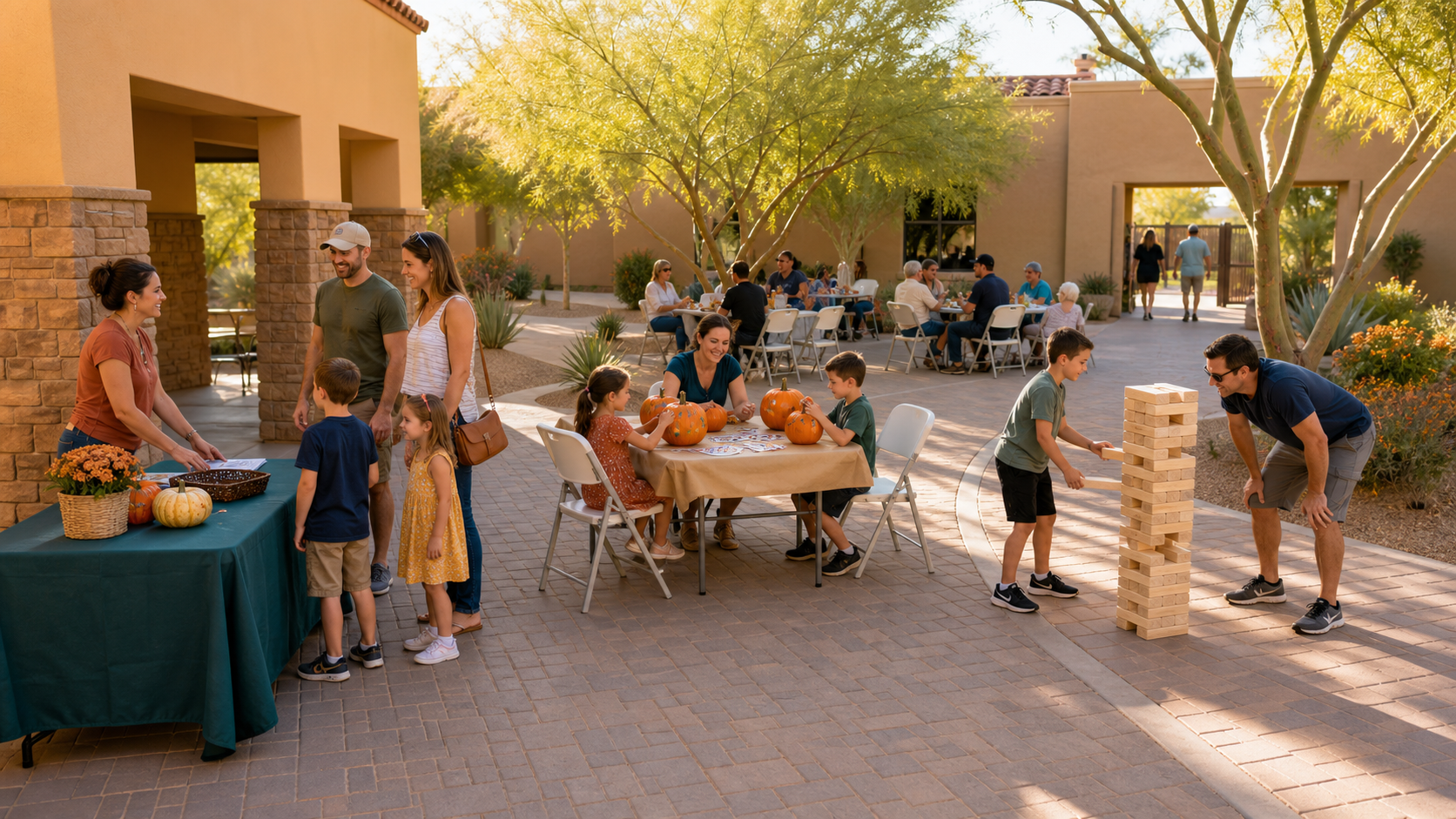
The fall festival plan can look wonderful on paper: pumpkin crafts, games, food, music, contests, vendors, and a photo area. Then the gates open, families stop at the entrance to figure out where to go, three booths form lines, and every unanswered question lands on the same volunteer.
A small fall festival does not need more attractions. It needs one easy route from welcome to goodbye. Start with one sentence that explains why people should come. Then build five guest stops: Welcome, Easy Yes, Main Moment, Pause, and Clear Goodbye. Assign one owner to each operational handoff before you add another booth.
Quick answer
Plan the guest experience first, the activity list second. If a family can arrive, join something quickly, share one memorable moment, rest or eat, and leave without confusion, the festival is large enough to feel special and simple enough to run well.
Write one promise before choosing activities
The fastest way to overload a fall festival is to begin with a shared spreadsheet labeled “ideas.” Everyone adds one favorite activity, no one wants to remove anything, and the event becomes a collection instead of an experience.
Write a one-sentence guest promise first:
Families can drop in for two relaxed hours, find something fun within a minute, share one community moment, and leave whenever they are ready.
That is an editorial example, not a required length or format. Your promise might center on welcoming new school families, helping neighbors meet, supporting a local cause, celebrating student work, or giving children a safe place to enjoy fall activities.
The sentence is a filter. If a proposed booth does not make the promise easier to keep, it is optional. If it requires another line, power source, specialist, approval, or volunteer shift, count that operational cost before approving the idea.
For a school-centered event, the live Arizona back-to-school event ideas guide offers smaller formats that may satisfy the goal without building a full festival.
Build the Five-Stop Fall Festival Walkthrough
Stand at the entrance and imagine a family arriving for the first time. Do not start with the site map. Start with the questions they will ask in order.
| Guest stop | What the family needs | Practical setup | Warning sign |
|---|---|---|---|
| 1. Welcome | “Are we in the right place?” | One visible entrance, short greeting, simple map or verbal orientation | Guests stop in the path to search for information |
| 2. Easy Yes | “What can we do right now?” | One no-schedule activity near the entrance with obvious instructions | The first activity needs registration, payment, a team, or a long explanation |
| 3. Main Moment | “What should we not miss?” | One shared attraction or scheduled moment that fulfills the invitation's promise | Three announcements compete, or guests never know when the key moment happens |
| 4. Pause | “Where can we eat, sit, talk, or regroup?” | Seating, water, food, quieter space, and clear paths beside the activity loop | Adults stand in play lanes or food lines block movement |
| 5. Clear Goodbye | “Are we finished, and how do we leave?” | Obvious exit, final information, waste or return point, and a clean path out | Exiting guests must cross an active game or rejoin the entrance line |
This is the Five-Stop Fall Festival Walkthrough. It is intentionally qualitative. You do not need to calculate every family's movement. You need to notice whether each stop exists and whether two stops are fighting for the same space.
Draw the route with a thick marker. Add tables, games, food, cords, speakers, trash, restrooms, gates, parking, and emergency access only after the route makes sense. A beautiful setup is not finished if the guest journey disappears beneath it.
Choose activities by the job they do
A useful festival lineup has layers, not just quantity.
Give guests one easy first yes
Choose something a person can understand quickly and join without waiting for a scheduled start. Examples include a simple collaborative mural, a sticker-based pumpkin decorating table, a fall-color scavenger card, or a clearly explained free-play game.
If giant games are part of the plan, use the yard-game capacity and layout guide to check player slots, waiting space, retrieval paths, and real site fit. Do not place a tossing lane across food, seating, an entrance, or a primary walkway.
Build one shared moment
The main moment gives families a reason to feel they attended the same event. It could be a student performance, costume parade, community photo with consent, short team challenge, raffle drawing that follows applicable rules, or twilight movie start.
One shared moment is usually stronger than several half-promoted moments. Put its time in the invitation and at the welcome point. Make participation optional, especially when the event includes different ages, sensory needs, mobility needs, family situations, or comfort levels.
Create a real pause
People stay when they can stop without getting in someone else's way. Place seating where adults can talk and supervise without occupying activity edges. Keep food, water, and waste service close enough to find but outside the entry and main attraction.
If residents or school families are contributing dishes, the Claim, Carry, Land, Leave potluck guide helps separate sign-up, arrival, serving, and cleanup responsibilities. Do not describe any buffet as allergen-free unless a qualified, verified process supports that claim.
Stop after the lineup fulfills the promise. Empty space is useful. It becomes room for a stroller, wheelchair, conversation, late arrival, reset bin, water station, or volunteer who needs to help someone without blocking the festival.
Assign five handoffs before event day
Committees often assign setup tasks but leave live decisions unnamed. Write five roles with real names and phone numbers in the private organizer plan.
- Final decision owner: Settles scope questions and makes the final call when a plan must change.
- Welcome owner: Greets families, answers the first question, and notices entry congestion.
- Activity reset owner: Checks supplies, instructions, lines, loose pieces, and station boundaries.
- Food or vendor owner: Handles arrivals, placements, missing items, waste, and vendor questions.
- Safety and communication owner: Knows the emergency plan, property contact, weather decision process, and approved way to message guests.
One person can hold more than one role at a small event. The important part is that every issue has a first destination other than “find the organizer.” Give volunteers permission to pause an activity when the approved setup, staffing, equipment, food process, or conditions are no longer appropriate.
For a weather decision plan and resident messages, adapt the three-decision Arizona HOA event plan instead of inventing a new process the morning of the festival.
Use a four-week planning rhythm
Four weeks is an editorial planning example for a small, already-approved private community event. Public events, food service, road impacts, city property, large crowds, alcohol, vendors, inflatables, live animals, pyrotechnics, and other components may require much earlier action. Confirm the real timeline before advertising.
| Planning point | Settle now | Useful output |
|---|---|---|
| Four or more weeks before | Purpose, property permission, date, site, event scope, budget, approvals, insurance questions, vendor needs, and final decision owner | One-page event brief and approval list |
| Three weeks before | Guest invitation, five-stop route, activity owners, food plan, equipment list, access needs, backup plan, and volunteer gaps | Draft map and role board |
| Two weeks before | Confirmed vendors or contributors, supplies, power, lighting, tables, chairs, waste, restrooms, parking, signs, and communication channel | Confirmed run sheet and contact list |
| Final week | Forecast and site conditions, quantities, arrival sequence, volunteer briefing, guest reminder, emergency contacts, and cancellation or change procedure | Final site plan and guest message |
Put real costs beside every approved element. The EventRent AZ party budget calculator is useful when food, supplies, tables, chairs, activities, permits, cleanup, and contingency need to be considered together. Replace estimates with current quotes where available, and do not advertise a feature until its cost, approval, owner, and site fit are confirmed.
Confirm Arizona property, food, and event rules
An HOA courtyard, school campus, private business lot, neighborhood street, city park, and public festival are not interchangeable. Requirements can change with location, attendance, road use, food service, vendors, alcohol, structures, electricity, amplified sound, animals, fire, and other event components.
Start with the property owner, school, HOA, venue, insurer, and the city or county offices responsible for the actual site. For Mesa events, the city's Special Event License guidance explains that qualifying festivals and temporary outdoor activities can require consultation, applications, attachments, and advance processing. Do not assume a private HOA or school event is automatically covered or automatically exempt. Ask the city about the specific plan.
If food vendors will sell, sample, or give away food or drink in Maricopa County, review the county's current special-event food requirements and confirm which coordinator and vendor permits apply. A vendor's presence does not remove the organizer's duty to verify the approved process.
Also confirm accessible arrival and participation, restroom access, parking and drop-off, lighting, electrical protection, fire and emergency access, child supervision expectations, photography or privacy rules, music or film permissions, waste, and the exact weather decision authority. These are review prompts, not a claim that one list satisfies every legal, safety, or property requirement.
Run the ten-minute empty-site walk-through
Before guests arrive, walk the site without pretending the plan is already correct.
- Enter as a first-time guest. Is the entrance obvious from parking or drop-off? Can someone find the welcome point without a private message?
- Join the first activity. Are instructions, supplies, queue space, and the next opening clear?
- Reach the main moment. Can seated guests, children, older adults, and people using mobility devices see or participate from an appropriate approved area?
- Carry a plate or drink to the pause area. Does that route cross a game, cord, line, gate, or performance space?
- Reset one station. Are replacement supplies, loose-piece bins, cleaning materials, and the responsible person easy to find?
- Follow the approved emergency and weather route. Keep exits and access points clear. Do not improvise equipment anchoring, electrical protection, crowd limits, or emergency procedures.
- Leave with a tired child. Is the exit obvious, lit when needed, and separate from the busiest activity?
If the walk fails, remove or move something. Do not solve a blocked path with another sign.
Final fall festival checklist
- One-sentence guest promise is approved.
- Five stops exist and do not compete for the same space.
- Every activity has a purpose, owner, supplies, instructions, and stop condition.
- One shared moment is clearly timed and optional participation is respected.
- Seating, water, food, waste, restrooms, and quieter space are easy to find.
- Tables, chairs, games, cords, vendors, and waiting groups stay out of required paths.
- Five operational handoffs have real names and contact details.
- Property, city, county, school, HOA, insurance, food, vendor, fire, accessibility, privacy, music, film, and safety questions are confirmed as applicable.
- Weather and change messages have an owner and approved send method.
- Costs, quotes, permissions, deliveries, cleanup, and contingency are visible in the plan.
- The empty-site walk-through passes before guests arrive.
Fall festival planning FAQ
How many activities should a small fall festival have?
There is no universal booth count. Start with one easy first activity, one shared moment, and one place to pause. Add another station only when it serves a different guest need, fits the site, has an owner, and does not create a new line or blocked route.
How long should a community fall festival last?
Choose the shortest window that can fulfill the invitation's promise. A relaxed resident open house may need less time than a public fundraiser with performances and vendors. Work backward from the main moment, food plan, volunteer shifts, property rules, setup, cleanup, and the needs of the expected families.
What should an Arizona fall festival invitation include?
Include who the event is for, date, start and end time, exact location, entrance or parking instructions, cost or ticket details if applicable, the main moment, what guests should bring, accessibility contact, weather or change-message plan, and RSVP or registration instructions when needed. Publish only details that are approved and confirmed.
A memorable fall festival is not the one with the longest activity list. It is the one families can enter, understand, enjoy, and leave without friction. Write the promise, protect the five stops, assign the handoffs, and let every extra idea earn its place.