Seasonal Event Planning
Should You Have a Kids' Table at Thanksgiving?
A Thanksgiving kids' table can be joyful or isolating. Use the Same Celebration Test, compare three seating patterns, and keep every child connected to the meal.
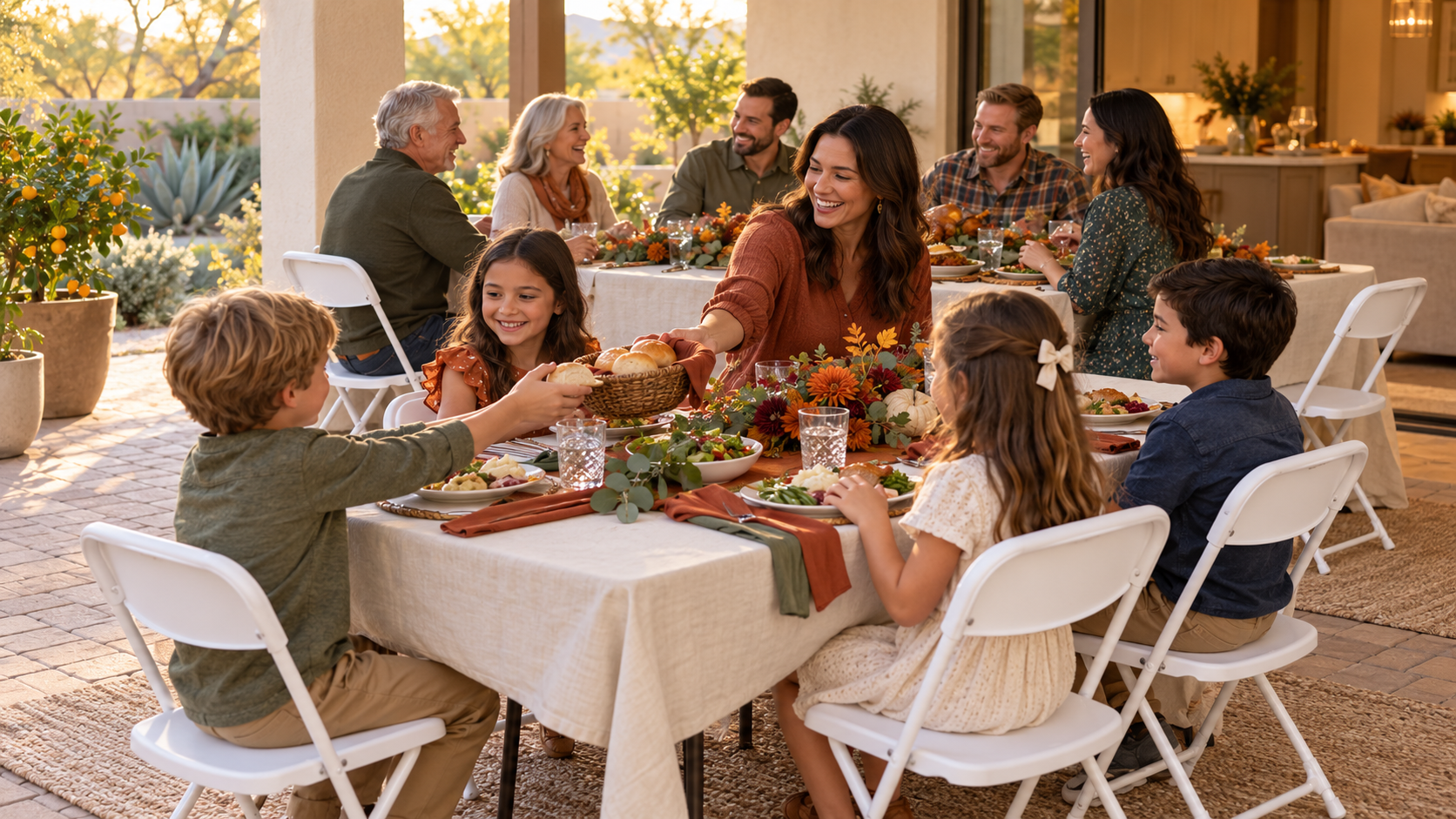
The kids' table can be the happiest table in the house. It can also feel like the place children were sent after every good seat was taken.
Use a separate kids' table when the children want it, their ages and needs fit the setup, and a responsible adult can still see, reach, and include them. Skip it when a child needs hands-on help, one child would be isolated, or the only available spot feels disconnected from the meal. The best arrangement is not automatically one table or two. It is the arrangement that keeps every child safe, comfortable, and part of Thanksgiving.
Quick answer: A kids' table works best beside the main table or in the same connected room, with stable seating, simple place settings, an adult bridge seat nearby, and shared moments that include everyone. Treat it as one part of the family table, not overflow.
Table of contents
- Start with belonging, not the chair count
- Use the Same Celebration Test
- Choose one of three seating patterns
- Place the kids' table where it stays connected
- Set the table for the children coming
- Keep activities simple and meal-friendly
- Create shared moments across both tables
- Run the two-minute seat check
- Thanksgiving kids' table FAQ
Start with belonging, not the chair count
A separate table should solve a child experience problem, not hide an adult seating shortage.
Some cousins genuinely love having their own conversation. They eat, laugh, and feel important because the table was planned for them. Other children would rather sit beside a parent, an older cousin, or the grandparent they came to see. A shy child, a first-time guest, or the only child in one age group may experience the same setup very differently.
Do not decide by age alone. Ask what will help the actual children feel comfortable and included. Parents and caregivers can answer that question privately without turning a child's needs into a group announcement.
The broader room still matters. If the whole guest list is stretching the home, use the small-space Thanksgiving seating plan to protect real plate places and walking routes. Then make the kids-table decision inside that complete room plan.
Use the Same Celebration Test
Before setting a second table, answer four questions.
- Want: Do the children actually want to sit together, or are adults assuming they do?
- Watch: Can a responsible adult see and reach the table without leaving the meal?
- Fit: Does the seating work for the children's ages, mobility, eating support, and comfort?
- Rejoin: Can the children participate in the welcome, gratitude, conversation, dessert, photos, and other shared moments?
A yes to all four means a kids' table can be a joyful choice. One serious no means the plan needs to change. The change may be small. Move the table closer, seat a caregiver at the nearest end, let one child stay at the main table, or use one shared table instead.
This is not a test children must pass. It is a test for the host's setup.
Choose one of three seating patterns
There is no family rule that says children must sit separately. Choose the pattern that fits the group.
| Seating pattern | Works well when | Main benefit | Watch for |
|---|---|---|---|
| One shared table | The group fits comfortably and younger children need nearby help | Everyone hears the same conversation and shares the meal together | A table that technically fits but leaves trapped chairs or cramped plates |
| Children at one end of a shared table run | Children enjoy sitting together, but the host wants one connected arrangement | Gives kids their own conversation while keeping adults within reach | Treating the end like a separate zone with different food or less comfortable seats |
| A nearby kids' table | Several children are ready for it and the room supports a close, visible second table | Creates an easy child-size social group without crowding one table | Placing it in another room, around a corner, or in a traffic path |
If one child would sit alone, the separate table is probably not helping. If two teens would rather join adults, do not promote or demote them by tradition. Ask.
For the full furniture count, separate guest dining from buffet, drink, and support surfaces with the EventRent AZ table-and-chair planning guide. Keep the kids-table decision focused on people, not just totals.
Place the kids' table where it stays connected
The best location is close enough for ordinary conversation and help, but not directly inside the kitchen, buffet, or doorway rush.
Look for a spot that gives you:
- a clear sightline from a responsible adult's seat;
- a short path for help without squeezing between occupied chairs;
- stable, level flooring under every table and chair leg;
- distance from swinging doors, hot serving dishes, cords, heaters, open flames, pools, steps, and pet traffic;
- the same light, comfort, and attention as the adult table; and
- a simple way for children to join dessert, a toast, or a family photo.
On an East Valley covered patio, keep the children inside the same social space. Do not put them at the far edge simply because the patio has one more open patch. If the meal depends on outdoor seating, compare it with the outdoor Thanksgiving plan for Arizona hosts and maintain a complete indoor fallback.
The kids' table should feel intentionally nearby, not conveniently out of the way.
Set the table for the children coming
Match the seat and place setting to the child, not to a styled photograph.
Older school-age children may use ordinary dining or event chairs comfortably. Younger children may need a high chair or booster supplied by their caregiver and used exactly as its manufacturer directs. The U.S. Consumer Product Safety Commission explains the federal safety requirements intended to address falls, tip-overs, restraint problems, and other high-chair hazards. A stack of cushions on a folding chair is not a substitute for a child seating product.
Keep the tabletop calm:
- one stable plate place per child;
- cups and utensils the child already knows how to use;
- low decor that does not block faces;
- no lit candles or hot serving dishes within reach;
- no tiny loose decorations around children who may mouth them; and
- enough open surface for the meal.
Ask caregivers about seating, food, allergy, sensory, mobility, and supervision needs. They know the child better than a generic age chart does.
Keep activities simple and meal-friendly
A kids' table does not need to become a craft store.
Choose one quiet, optional activity for the waiting period or after plates are cleared. Plain paper and washable crayons, a simple conversation card, or a few family-photo prompts can work. Match every item to the children's ages and the caregivers' approval.
Avoid glitter, paint, loose beads, noisy electronic toys, and anything that competes with hot food or crowded place settings. Keep activity supplies in one small container that can leave the table when dinner arrives.
The table's first job is a comfortable meal. Entertainment is a small second job.
If food is served from a separate surface, use the one-way buffet setup guide to keep plates moving without sending children through opposing traffic. A caregiver should still decide how each child receives and carries food.
Create shared moments across both tables
Two tables can still feel like one Thanksgiving when the host plans the connection.
- Welcome everyone before people split into seats.
- Give both tables the same food access and level of care.
- Put a parent, grandparent, or willing older cousin at the adult seat nearest the children.
- Pause for gratitude, a toast, or another family tradition only when both tables can participate.
- Let children visit the main table after dinner when space and supervision allow.
- Bring dessert to both tables at the same time, or regroup together for pie.
The American Academy of Pediatrics' HealthyChildren.org encourages family meals as a time for conversation and participation. Its family routine guidance supports the simple goal here: make the meal a place where everyone can take part.
Do not make the children's table responsible for producing a perfect quiet dinner. It is still a table full of children. The host's job is to create a workable setting, not demand a staged result.
Run the two-minute seat check
Test the actual plan before the holiday week becomes busy.
- Sit: Put a person in the hardest seat at each table. Pull the chair out and stand up without asking someone else to move.
- See: Sit in the responsible adult's planned seat. Confirm that the entire kids' table is visible and reachable.
- Carry: Walk one empty dinner plate from the serving area to every child seat without crossing another line or brushing chair backs.
- Place: Set a real plate, cup, napkin, and utensils at each child seat. Remove decor until the place works.
- Share: Stand where a welcome or toast will happen. Confirm that children can see, hear, and join.
If the plan fails, change the arrangement before buying more decor. Move the table, remove a seat that traps the route, join the table run, or keep a child beside a caregiver.
When the guest count changes costs across food, furniture, activities, and cleanup, use the free EventRent AZ party budget calculator to protect the priorities that make the meal comfortable.
Day-of connection checklist
- Every child has the seat and help their caregiver expects.
- A responsible adult knows who is watching and assisting.
- Both tables receive food, water, and dessert without children being an afterthought.
- The path between tables stays open.
- Shared moments wait until everyone can participate.
- Any child who feels uncomfortable has an easy, kind path back to a caregiver.
Thanksgiving kids' table FAQ
What age should children sit at the kids' table?
There is no universal age. Consider whether the child wants the arrangement, can use the planned seat and place setting, has the support they need, and can remain connected to a responsible adult. Ask the caregiver rather than relying on a fixed cutoff.
Should teenagers sit at the kids' table?
Do not assign teens automatically because they are younger than the adults. Ask where they would be comfortable and useful. Some teens enjoy sitting with younger cousins. Others would feel singled out. Either answer can work.
Is a kids' table a good idea for only one or two children?
Usually not if it leaves one child alone or separates two children who would rather sit with family. One shared table, children at the end of a shared table run, or seats beside caregivers may feel more welcoming.
Where should a Thanksgiving kids' table go?
Place it in the same connected room or covered gathering area as the main table, within clear sight and easy reach of a responsible adult. Keep it out of kitchen, buffet, doorway, heater, pool, step, and cord traffic.
How early should I test the seating plan?
Test it as soon as the likely guest count and usable rooms are known. Repeat the two-minute seat check after cleaning and before final decorations, when the actual tables, chairs, and place settings are available.
Keep the children in the Thanksgiving story
A kids' table succeeds when children remember laughter, cousins, favorite foods, and being part of the family. It fails when the smaller table quietly becomes the place where the extra people went.
Use the Same Celebration Test. Choose the seating pattern that fits the children, keep the tables connected, and run the real seats once before the holiday. Then stop adjusting the room and let Thanksgiving become what the furniture was meant to support: time together.