Community Event Planning
How to Get More Residents to Attend an HOA Event Without Sending More Reminders
More reminders are not the answer. Use Promise, Path, Person to make your HOA event relevant, clear, and easier for residents to join.
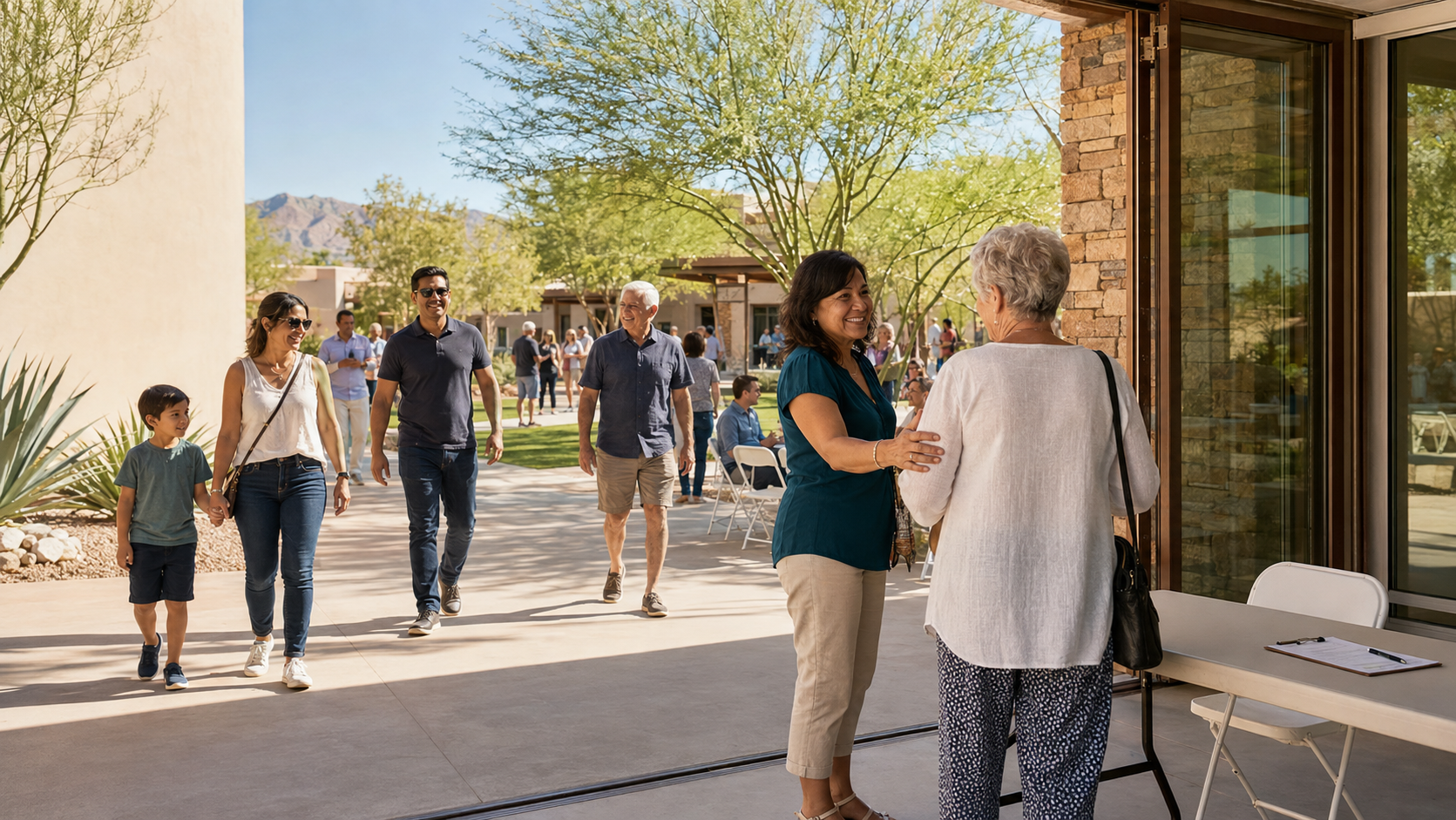
You reserve the clubhouse, choose the food, make a cheerful flyer, and then watch the RSVP list barely move. It is hard not to take that silence personally.
The answer is usually not another copy of the same reminder. Give residents three reasons to say yes: a Promise they care about, a Path with no missing details, and a Person who makes the invitation feel human. Then make the first 15 minutes easy for someone who arrives alone, late, or unsure where to begin.
Quick answer
To increase attendance at an HOA event, describe one specific benefit, answer the practical questions that make people hesitate, and ask a few connected residents to invite neighbors personally. Use three useful messages instead of a stream of repetitive reminders: announce the promise, show what the experience will be like, then send the final logistics.
In this guide
- Use the Promise, Path, Person Plan
- Build a three-touch invitation rhythm
- Use copy-ready HOA event messages
- Give different residents an easy way to join
- Plan the first 15 minutes
- Avoid turnout mistakes that create friction
- Run the Easy Yes Check
- Read the HOA event attendance FAQ
Stop promoting “an event” and explain the reason to come
“Join us for community fun” sounds friendly, but it gives a busy resident almost nothing to picture. Will there be a meal, a 20-minute activity, a two-hour program, a meeting, or a place for children to play? Is this built for families, adults, new neighbors, long-time residents, or everyone at once?
Start with one promise a resident can repeat to someone else:
- Meet three neighbors who live on your side of the community.
- Let the kids play while adults share an easy dinner.
- Stop by for dessert and help choose next season's resident activity.
- Bring a chair, stay for the outdoor movie, and leave whenever bedtime wins.
The promise is not a slogan. It is the honest experience you are prepared to create. If the event cannot fulfill it, revise the plan before promoting it.
For an event that still needs a concept, choose the experience first with the Arizona fall-festival planning guide. This turnout guide begins after the purpose and basic format are real.
Use the Promise, Path, Person Plan
The EventRent AZ Promise, Path, Person Plan separates three jobs that often get squeezed into one crowded flyer.
| Part | Question to answer | What the resident needs to see | Common miss |
|---|---|---|---|
| Promise | Why would this be worth part of my day? | One concrete experience or outcome | A theme without a benefit |
| Path | Can I tell exactly how to attend? | Who is invited, date, time window, place, cost, food, what to bring, RSVP method, update channel, and a contact for questions | A pretty announcement with missing logistics |
| Person | Will someone notice if I come? | A neighbor, volunteer, committee member, or host who extends a real invitation and welcomes arrivals | Depending only on a mass email |
Promise: make the benefit specific
Choose one main reason to attend. Food, games, a movie, a performance, a resident vote, a service project, and a social hour can all belong at an event, but they should not compete for the headline.
Specificity also keeps expectations honest. “Drop in for tacos and meet the new neighbors from 5:30 to 7:00” is easier to evaluate than “You won't want to miss our biggest event ever.” Avoid hype, fake urgency, and promises the schedule cannot support.
Path: remove the questions that become a quiet no
A resident may like the idea and still skip it because they do not know whether children are invited, whether dinner is provided, how long they need to stay, where to park, or whether they can arrive late.
Write the invitation so a person can decide without hunting through an old email. Include only the details that affect that decision, then provide one direct contact for anything personal or unusual.
Person: make one invitation feel like it came from a neighbor
Mass communication creates awareness. Personal communication creates belonging.
Ask a small group of connected residents to each invite a few households they genuinely know. Give them the same accurate event details, but let them use their own voice. “A few of us are going at six. Want to walk over with us?” feels different from forwarding the association newsletter.
Do not pressure people, track them socially, or imply that attendance is required. The goal is to make the welcome believable.
Build a three-touch invitation rhythm
More messages do not automatically create more interest. Each message should do a different job.
| Timing | Message job | Include | Leave out |
|---|---|---|---|
| About 21 days before | Earn attention | The promise, date, time window, place, who is invited, and one simple next step | The full operating plan |
| About 10 days before | Make the experience easy to picture | One human detail, a short activity or food preview, what to bring, and the RSVP path if a count matters | A repeat of the first flyer with no new value |
| About 2 days before | Remove final friction | Entry point, parking or walking note, weather or location update, start and end time, and contact | New requirements, surprise costs, or guilt about unanswered RSVPs |
This is an editorial starting rhythm, not a universal rule. A small drop-in social may need less lead time. A large event with registration, vendors, food commitments, or a holiday weekend may need more.
The EventRent AZ invitation-timing guide explains how to set the first message and RSVP deadline around the decision that actually requires a headcount.
For one local comparison, the City of Mesa's Neighborhood Watch planning guidance suggests choosing a date convenient for most neighbors, asking which night and time work, and sending invitations or flyers at least two weeks ahead. Read the current City of Mesa Neighborhood Watch guidance as an example, not as a rule for every HOA social event.
Use copy-ready HOA event messages
Replace the brackets and remove any line that is not true.
First announcement
Neighbors, save [day and date] for [event name]. From [start time] to [end time], [who is invited] can [one specific promise]. We will meet at [exact location]. [Cost or “There is no cost.”] [RSVP instruction or “No RSVP is needed.”] Questions or accommodation requests can go to [authorized contact and method]. More practical details will follow.
Experience preview
Here is what [event name] will feel like: [one sentence about the main activity, meal, or shared moment]. Come for [whole event or drop-in window]. Please bring [only what is truly required]. If your plans change, [RSVP update instruction].
Final logistics
We are looking forward to seeing neighbors on [day]. Enter at [specific entrance]. [Parking, walking, or gate note.] The event runs from [start] to [end], and [late-arrival guidance]. The current location is [location or verified backup]. For a last-minute question, contact [authorized person and method].
If the only missing detail is a headcount, adapt the copy-ready RSVP reminder wording instead of resending the whole invitation.
Give different residents an easy way to join
One event can welcome different lives without trying to become ten events.
- For the resident with a packed evening: Publish a real drop-in window and the approximate length of the main moment.
- For the newcomer: Offer a named welcome contact or an optional “meet at the entrance” note.
- For the parent: State whether children are invited, what supervision remains with caregivers, and whether the activity fits the expected ages.
- For the older adult or person who may need to sit: Mention available seating and where to ask about access needs, after the responsible organizer verifies both.
- For the quieter neighbor: Include a low-pressure role or activity that does not require arriving with a group.
- For residents who use different communication methods: Share the same confirmed information through approved channels instead of letting email, social posts, and signs drift apart.
If your association, organizer, venue, or event has accessibility obligations, confirm them with qualified guidance. ADA.gov explains that effective communication depends on the context and the person's normal communication method. Use the current ADA.gov effective communication guidance as a starting source, not a substitute for legal or accessibility review.
Also confirm who may be invited. Owners, renters, household members, guests, vendors, and the general public are not automatically interchangeable under every association's documents, insurance, venue, or event rules.
Plan the first 15 minutes before promising a warm welcome
Turnout work does not end when someone arrives. If the entrance feels confusing or every person is already locked into a private group, a newcomer may leave early and remember that feeling next time.
Protect the promise with four visible cues:
- A clear arrival point: A guest should know where the event begins.
- A person who can pause: The greeter should not also be solving food, sound, registration, and vendor problems.
- A place to settle: Put a few stable seats where people can see the gathering without blocking the entrance.
- A next move: Offer one obvious action, such as picking up a name tag, adding a song request, joining a drop-in activity, or finding the food area.
Tables and chairs can quietly support this welcome. Keep any check-in table out of the main path, use conversation-friendly seating clusters, and avoid making every empty chair feel like the front row of a meeting. The table-and-chair planning guide helps separate guest seating from welcome, food, drink, and activity surfaces.
For a deeper on-site plan, use the Arizona neighborhood block-party guide. Its Easy Way In Test begins where this promotion plan ends.
Avoid turnout mistakes that create friction
- Do not lead with the committee's work. Residents need the benefit before the planning history.
- Do not hide the end time. “Starts at 5:30” can sound like an unlimited commitment.
- Do not publish different facts in different places. Choose one source of truth and update every approved channel.
- Do not make the RSVP harder than the event. Ask only for information the organizer truly needs and explain what happens next.
- Do not turn every reminder into a countdown. Add a useful detail or do not send it.
- Do not use prizes or food to disguise a required meeting. Keep social-event promotion separate from governance, quorum, voting, and legal-notice duties.
- Do not promise access, safety, child care, food accommodations, transportation, or services that have not been confirmed by the responsible person.
Run the Easy Yes Check
Before the first announcement goes out, ask someone who did not plan the event to read it once. Can they answer all ten questions?
- What is the one reason to come?
- Who is invited?
- What day is it?
- When can I arrive, and when does it end?
- Where exactly do I go?
- What does it cost?
- Is food included or available?
- What must I bring?
- Do I need to RSVP, and how?
- Who handles questions or accommodation requests?
Then ask one final question: Would I feel comfortable arriving if I knew only one person?
If the answer is no, add a welcome person, a visible first activity, or a simple “walk over with us” invitation. Do not add another paragraph of committee language.
HOA event attendance FAQ
How far in advance should an HOA promote a social event?
About three weeks is a practical starting point for a simple local social, with a useful follow-up and final logistics message. Use more time when registration, food commitments, vendors, a holiday weekend, property approval, or a large guest group makes planning harder. Confirm any formal notice requirement separately because a social invitation is not a legal notice.
Should an HOA require RSVPs for every event?
No. Require an RSVP when the count changes capacity, food, supplies, staffing, security, seating, or another real commitment. A low-cost drop-in event may be easier to join without one. If you need a count, make the response method simple and explain why the deadline matters.
What if residents still do not attend?
Do not declare the community uninterested after one event. Ask a few attendees and non-attendees what made the decision easy or hard, then change one major variable next time, such as the promise, timing, format, or communication path. Keep the question short enough that residents will actually answer it.
Make the invitation feel easy to accept
Residents do not owe an event their time because the committee worked hard. They come when the experience feels relevant, the logistics feel dependable, and the welcome feels real.
Write one promise. Clear the path. Put a person behind the invitation. Then use the Easy Yes Check before you send anything.
That is more useful than another reminder, and it gives the event a better chance to begin with neighbors already expecting to belong.